5 Habits Successful People Share

Why do some professionals achieve higher levels of success than others? While it may be easy to assume that luck is the biggest differentiator, that is rarely the case. Instead, successful people embrace beneficial habits, allowing them to reach heights that may seem impossible to others.

By learning how they do what they do, you can elevate your career. If you aren’t sure where to begin, here are five habits successful people share that you can use, too.

1. Ownership of Their Careers

Successful professionals don’t leave their career development to chance. Instead, they identify the skills that can help them flourish and then work to acquire or hone them independently. They aren’t dependent on workplace training opportunities, so they are never stymied by a lack of company funding, educational systems, or other internal tools.

If you want to excel, take stock of your skillset. Next, research skill areas that could help you move up. Then, acquire any missing skills on your own time, allowing you to position yourself for the next step on your career path.

2. Driven to Negotiate

One key difference between successful people and the average professional often involves negotiating. If you never try to get a better deal – such as a higher starting salary or access to a promotion – your career won’t advance as quickly as it may otherwise.

Not only do you need to get comfortable with negotiating, but you need to develop your negotiation skills. That way, you can seize every opportunity.

3. Consistently Exceed Expectations

While your job may only require that you meet expectations, if you want to accelerate your career, then you need to aim higher. If you consistently exceed expectations, you’re showing that you’re capable of taking on more, something that can make you a more attractive candidate for promotional opportunities.

In many cases, the first step is to learn about your employer’s goals and priorities. That way, you can align your actions with them, making you a more valuable asset.

Beyond that, it’s all about motivation. You need to learn to push yourself to do more than the minimum, even if it isn’t necessary. This helps you develop a strong reputation, one that can serve you well during your career.

4. Learning from Failure

Every misstep in your career is an opportunity. It serves as a lesson at a minimum, letting you know what not to do down the line. The best-case scenario spurs growth, allowing you to become a more capable and resilient professional.

When you make a mistake, take ownership of the error. Examine the situation to see what went wrong and develop a plan for making it right. Then, execute that plan, ensuring that the outcome is as positive as possible.

5. Not Going It Alone

While taking ownership of your career is wise, that doesn’t mean you have to go it alone. Having a reliable network that can help you on your journey is smart. Not only may they be able to offer you advice or serve as a sounding board, but they may also provide you with access opportunities that aren’t available otherwise.

Similarly, partnering with a recruitment agency is a smart move. You’ll gain access to job search allies who can help you tap into great promotional opportunities and assist with honing your resume and interviewing skills.

If you’re looking to take the next step in your career, the team at The Advance Group wants to hear from you. Contact us today.




3 Ways to Make Your Company Attractive to Future Employees

Today, professionals have an increasing number of choices when it comes to employers. Along with local opportunities, the rise of remote work has broken geographical barriers, allowing those with the right skills to work for companies all across the country from the comfort of their own home.

Plus, candidates are doing an increasing amount of research before applying for jobs. They are digging much deeper than just reading job ads, also spending time reading employee reviews, assessing the company on social media, and more.

As a result, employers need to do more to catch the attention of top talent than ever before. If you aren’t sure where to begin, here are three ways to make your company attractive to future employees.

1. Cultivate Your Employer Brand Strategically

Your employer brand is a reflection of what you have to offer your workforce. It’s a public presentation that highlights key differentiators, allowing candidates to get a fuller understanding of why you’re a better option than your competitors.

Ideally, companies need to work to develop their employer brand strategically. This includes everything from defining your company mission and values, honing your brand voice, and engaging with candidates to enhance their experience.

With a strong employer brand, you’ll do more than attract more candidates; you’ll also connect with job seekers that align better with your needs and culture. This improves the quality of your talent pool, ensuring it’s brimming with right-fit professionals at all times.

2. Encourage Ambassadorship

Overall, candidates are more likely to trust information when it comes from an individual instead of the company. That means your current workforce is a recruitment asset.

By encouraging your employees to become ambassadors for your company, you can reach job seekers who may otherwise bypass your opportunities. Along with tapping their own networks, they can reach out to or connect with enticing prospects, increasing the size of your talent pool.

In some cases, you may need to offer training to help your employees function as ambassadors. Additionally, you may want to launch an official referral program, giving them a place to point candidates who may be ideal for an open position.

3. Keep an Eye on Your Reputation

Social media platforms, sites like Glassdoor, and a slew of other online destinations make it easy for current and past employees to share their thoughts about working for a company. Since the information is readily available, many job seekers read those reviews when deciding whether to apply for a position. If you aren’t keeping an eye on your reputation on sites like those, and what’s being shared doesn’t show your company in a positive light, you may be missing out on talent.

While you may not be able to get reviews removed, you can typically respond to them. Thoughtful, public replies not only show that you’re willing to listen to criticism but that you’re also open to engaging in a transparent dialog. That can go a long way toward preserving your reputation.

Ultimately, all three of the tips above can make your company more attractive to candidates. If you’d like to learn more about how you can achieve recruitment success, the staff at The Advance Group can help. Contact us today.


This Skill Can Help Your Career (And Life!)

In the workplace, effective communication is crucial. The issue is that many people overlook some critical components of effective communication, a situation that can potentially lead to misunderstandings or conflicts that could genuinely be avoided.

Luckily, by honing a specific skill – empathetic listening – you can dramatically elevate your communication capabilities. Not only can empathetic listening skills boost your career, but they can benefit all aspects of your life. If you wonder what empathetic listening is and how it can help you thrive, here’s what you need to know.

What Empathetic Listening Is

Empathetic listening is an approach to communication that focuses on deeply understanding the perspective of another. Along with listening to the words a person uses, empathetic listening also requires a little bit of reading between the lines, allowing you to glean the intent behind what’s being said.

Additionally, empathetic listening concentrates on forging connections. It’s highly similar to active listening and requires understanding the other person on an emotional level, making it easier to get insights into their motivations, perspectives, and needs.

Once you learn more about the person’s emotional experience, you’ll have an easier time empathizing with their position. Putting yourself into their shoes won’t be as challenging, leading to a greater overall understanding of the situation.

How Empathetic Listening Benefits You

Empathetic listening is a powerful skill that can benefit you in various ways, both on professional and personal levels. First, it can help you forge stronger relationships with those around you. You’ll have an easier time understanding others, and that can lead to great trust and respect.

Second, you’ll become more aware of how feelings influence communication. This can lead to better emotional intelligence, as well as improvements to your collaboration skills. Understanding a person’s motivations and perspective on matters is useful, particularly when you need to reach a consensus or resolve conflict.

Finally, empathetic listening promotes inclusivity. You can understand the perspective of another with greater ease, all without judgment for those whose backgrounds differ from your own. In turn, this leads to an environment where everyone feels safe, respected, and valued, a situation that can improve communication and collaboration.

How to Improve Your Empathetic Listener Skills

If you want to become a better empathetic listener, the first step is to be mindful of where you place your attention. As with active listening, you want to focus on the speaker, ensuring you don’t let your mind wander during the conversation.

After that, learning to key into body language is crucial, and practicing tracking subtle cues like adjustments in a person’s pitch or cadence. Additionally, getting comfortable with asking clarifying, open-ended questions is a must, as well as summarizing what was shared to ensure you fully understand.

By using those approaches, you can improve as an empathetic listener. If you would like to learn more about skills that can boost your career and prove valuable in your daily life, the team at The Advance Group wants to hear from you. Contact us today.


Start Getting the Best Out of Your Team!

As a manager, you know the importance of getting the best out of your team. But figuring out how to prime them for success can often be quite challenging. Every employee is motivated by different things, making it hard for managers to choose approaches that will achieve the desired result.

Luckily, there are a few universally valuable techniques. If you need to get the best out of your team, here’s what you need to know.

Motivating Your Team for Success

While every employee may be motivated by different things, certain points are universal. First, if you want to ensure your team exceeds expectations, you need to make sure your expectations are clear from the beginning. Without definitive insights into your goals and priorities, they won’t know where to aim, causing them to potentially fall short simply because they didn’t know what success was in your eyes.

Second, feedback needs to be constructive and continuous. If you notice an issue, address it immediately in private. That way, the employee won’t build a bad habit simply because they weren’t aware that it was a problem.

Additionally, make recognition part of your culture. Publicly praising your team for a job well done helps keep morale high. Not only will your employees feel seen, but they will also feel valued, and that goes a long way.

Finally, help your team understand how their efforts impact the broader mission. By doing so, even the smallest tasks can seem more meaningful. Often, this causes the quality of outputs and engagement to rise, both of which create better job performance.

Hiring to Improve Team Performance

When you want to make sure your team is primed to exceed expectations, hiring the best is necessary continuously. Without top talent for your open positions, productivity and output quality may suffer. Plus, being shorthanded or keeping an underperformer onboard harms morale, leading to more performance challenges.

If you want to hire to improve team performance, you need to make sure the chosen candidate is an excellent fit on multiple fronts. First, they need the right core skills as well as a willingness to learn. That way, if they need to update their skill set, they will be happy to dive into new territory and effective at skill acquisition.

Additionally, the new hire needs to mesh with your team’s and company’s culture. Without the right mindset, even a highly skilled employee can falter. That’s why having both the proper technical capabilities along with being a culture fit is so crucial. Together, that leads to long-term success, both for them individually and at the team level.

If you need high-quality candidates for your open positions, The Advance Group can provide you with access to top-tier talent. We continuously cultivate a talent pool brimming with exceptional active and passive job seekers, ensuring you can find your perfect match faster.

If you are ready to experience the difference yourself, the staff at The Advance Group wants to hear from you. Contact us to learn more about our recruitment and hiring services and see how our customizable offerings can make building your ideal team easier than ever.


How to Stand Out in Your Michigan Job Interview!

Succeeding during a job interview requires more than simply showcasing that you have the right skills and experience for the role; you also need to stand out from the competition. Being memorable and engaging while also coming across as capable and confident can be tricky, but it’s a must if you want to become the top candidate for the role.

By using the right approach, you can increase your odds of acing your interview on every level. If you aren’t sure where to begin, here are some tips that can help.

Be (Genuinely) Enthusiastic

Enthusiasm can make a huge difference during your job interview. Typically, hiring managers want to find candidates passionate about their field and the role, and the company. As a result, letting some of your excitement for the opportunity and your career can work in your favor.

However, as with all things during an interview, it’s essential to be genuine. Attempting to fake enthusiasm rarely works, as most hiring managers are adept at identifying when a candidate is trying too hard to convey an emotion.

Luckily, adding genuine enthusiasm can be easy. When you prepare for the interview, find achievements in your past that legitimately make you smile. Also, research the company to discover details that ignite your excitement, such as its broader mission, its culture, or projects that come with the job. That way, you’ll actually be excited when you speak.

Have Some Personality

While it’s important to remain professional during an interview, that doesn’t mean you need to be devoid of personality. In fact, it’s often better to be yourself. By doing so, you can increase your odds of figuring out if the workplace is a good culture fit while also standing out from the competition.

Now, this doesn’t mean you should be too casual. Instead, consider how you act with colleagues or managers you’ve known for quite some time and use that as a guide.

Sprinkle in Some Company Details

If you really want to stand out during your interview, mentioning some details about the company when you answer questions can be a great way to do it. For example, adding in a tidbit about the company’s values, a recent accomplishment of theirs, or similar information shows that you took the time to learn what the organization is about, which can go a long way.

Send a Thank You Note

With a thank you note after your job interview, you have a chance to close out strong and leave a lasting positive impression. It’s a simple gesture but an impactful one.

Everyone likes feeling appreciated, so a well-thought-out thank you email can bring a smile to the hiring manager’s face. Plus, it’s another chance to highlight an achievement, address a point you may have missed during the interview, showcase your enthusiasm, and otherwise position yourself as an exceptional candidate.

Do you want to stand out at your next job interview? If so, the team at The Advance Group wants to hear from you. Contact us to learn more about your interview prep and job search services, and see how working with The Advance Group can make it easier than ever to land your perfect opportunity.


Job Applicant Priorities Have Changed. Here’s How to Keep Up!

Due to the pandemic, expectations about employment have shifted. Professionals have new priorities, causing them to favor different kinds of opportunities than they did previously.

By adapting to these shifts in candidate sentiment, you can increase your odds of connecting with top talent. If you aren’t sure where to begin, here are some tips that can help you address these emerging priorities.

Offer the Right Benefits

The pandemic put a spotlight on certain benefits, particularly medical insurance, and sick leave. Today’s job seekers are looking for options that make caring for their health easier, ensuring they have the right coverage and leave options should they fall ill.

However, other benefits have also become priorities. Flexible schedules, work-life balance benefits, wellness initiatives, and similar options are also highly sought, particularly among those who qualify as top talent.

Adopt a Safety-First Mindset

How an employer acted during the pandemic matters to job seekers today. Many of them now favor companies with a safety-first mindset, as they feel those employers are better equipped to keep them healthy.

Along with stating that safety is a priority, make sure to discuss any programs that help you ensure the health of your teams. For example, if the company provides PPE, make that clear. You can also highlight safety committees, training, and other strategies your organization uses to address concerns and ensure everyone is aware of best practices.

Embrace Remote Work

The pandemic gave many professionals a chance to experience life as remote employees. While not all professionals intend to telecommute long-term, many have found value in the arrangement. As a result, they prefer employers who support remote work arrangements, either on a full- or part-time basis.

If a position can feasibly be handled at least part of the time remotely, consider creating a policy that addresses that arrangement. Then, share those details openly, ensuring job seekers are aware of what’s available.

Offer Contract Positions

Since the job market is very competitive, many professionals are open to alternative options, including contract positions. Companies with a short-term need for an in-demand skill set should consider this an opportunity, as it may make it easier to access the kind of professionals they need for special projects.

Plus, if you could potentially use those skills long-term, you can use a contract role as a form of a working interview. You can see how the candidate meshes with your environment and performs in the position before extending a formal offer of permanent employment. That way, you can ensure it’s a great fit before you move forward.

Ultimately, job seeker priorities have changed, altering the recruitment landscape. By addressing the points above, you can make your company a more attractive option, ensuring that you can connect with the high-quality candidates your organization needs to thrive.

If you’d like to learn more about how to attract the best and brightest job applicants, the team at The Advance Group wants to hear from you. Contact us today.



How to Discover a Company’s REAL Culture

Most professionals understand the importance of finding an employer with an exceptional culture. However, getting a genuine glimpse into a company’s culture is often incredibly challenging. Since organizations know that culture matters to candidates, they often go out of their way to ensure they look their best. Not all, but some, will even be disingenuous, presenting a false image of the culture they have in hopes of recruiting better talent.

Thankfully, it is possible to find out about a company’s real culture. If you aren’t sure where to begin, here are some tips.

Read Employee Reviews

Sites like Glassdoor make it possible for job seekers to get a bit of an inside scoop on a company’s culture. The employee reviews on websites like that give candidates plenty of insights into what it’s like to interview with and work for a wide range of organizations.

Now, it’s important to keep in mind that these reviews aren’t guaranteed to be accurate. However, any that are well-written and discuss both pros and cons can be great places to start, as the odds that those reviews are real may be a bit higher. After checking those, branch out into more positive or negative reviews, working your way toward a bigger picture.

Along the way, you also want to read any responses from the company. How it reacts to feedback – both positive and negative – can be enlightening, so don’t overlook those opportunities to learn more.

Tap Your Network

If any member of your network had dealings with or previously worked for the company, they can be a great source of information about its culture. Reach out directly and see if they would be willing to share any insights that could help you determine if it is the right place for you.

You can also check your network for second-degree connections to the company. While you may need to ask your contact for an introduction before reaching out, this can be another effective path for finding out about a company’s real culture.

Dig into the Culture During the Interview

If you’ve landed a job interview with the company, you may have a few opportunities to learn more about its culture. First, if you’re interviewing on-site, you can observe the workplace firsthand. Often, you can tell a lot about what it is like to work for a company by casually watching the employees around you and seeing what workspaces look like and various aspects of the building’s design.

For example, smiling professionals moving with intention but in a non-hurried fashion could indicate a generally happy and enthusiastic workplace. Personalized workspaces, ample sunlight, live plants, and strategic uses of color could be good signs, too, as they give employees a sense of ownership and lift the mood.

In contrast, a lack of light, no personalization, and dull colors could mean the company doesn’t value the quality of its environment. Workers that look tired stressed, overtasked, or disengaged could indicate problems, as well.

You can also find out more about the company’s culture when you meet with the hiring manager. At the end of your interview, you usually have a chance to ask some questions, allowing you to dig in a bit. You could ask them to describe the culture in their own words or discuss a moment they felt genuinely captured the company’s culture, for example. Asking what successful employees have in common can also be enlightening, as the traits they mention could let you know about the pace of the workplace and general performance expectations.

At The Advance Group, we understand the importance of culture. That’s why we only partner with employers with proven track records, ensuring that candidates have access to the best workplaces in the area. If you’d like to find out more, the team at The Advance Group wants to hear from you. Contact us today.


Want to Keep Employees Longer? Start by Hiring Them Sooner!

While it may not seem like time-to-hire and turnover rates go hand-in-hand, they often can. When your hiring process is slow, it can lead to recruitment and retention challenges that negatively impact your company.

Often, the resulting issues can be avoided simply by making hiring decisions faster. If you are wondering how time-to-hire reductions positively impact retention, here’s what you need to know.

Top Talent Aren’t Available for Long

When it comes to retention, the quality of the fit matters. If an employee is a strong match for the role and your company’s culture, they may be more inclined to stay long-term. They will feel like they belong, and that makes a significant difference.

The issue is that leading candidates representing the best fit aren’t typically part of the job market for long. Since their capabilities are highly desirable, they tend to get job offers with relative ease. As a result, a slow hiring process means you’ll miss out, leaving you stuck settling for a less-than-ideal match or relaunching your recruitment initiative to try and find a top talent again.

If you go with the former, turnover issues can arise. A poor fit means that the employee may not excel in the position or align with your culture, both of which can leave them disconnected from your company and frustrated, both of which could lead to a quick exit. Plus, if they aren’t able to perform well in the role, you may have let them go.

Harm to Your Employer Brand

Job seekers typically share their candidate experiences with others. If your hiring process is slow and cumbersome, word of that will likely get out. In time, your employer brand will be diminished, and that comes with long-term ramifications.

Once a company gains a reputation for having a subpar candidate experience, top talent usually begins to steer clear of that employer. They choose not to engage in the hiring process at all, as they don’t want to – or can’t afford to – be bothered with a long time-to-hire.

In turn, your talent pool shrinks, and candidate quality falls. You aren’t attracting the best and brightest from the start, leaving you with job seekers who might not fully meet your needs.

As mentioned above, a bad fit has a strong impact on turnover. Whether it’s through having to terminate a poor performer or becoming frustrated in the position, retention issues arise.

Damage to Your Culture

A long time-to-hire harms your internal operations, mainly because you have an understaffed team for a lengthier period. Being shorthanded increases stress among the impact employees and also harms morale. In time, these mindset shifts damage your company culture, leading to lasting and pervasive negative changes.

As your company culture is harmed, you’ll have a harder time attracting top talent. This, again, leads to lesser quality matches, which then causes rises in turnover.

As demonstrated above, a lengthy hiring process is harmful to your recruitment and retention goals. By shortening your time to hire, you’ll gain more access to top talent and strong matches, increasing the odds that you’ll end up with new employees that will stay long-term.

If you’d like to learn more about effective recruiting techniques, the team at The Advance Group wants to hear from you. Contact us today.



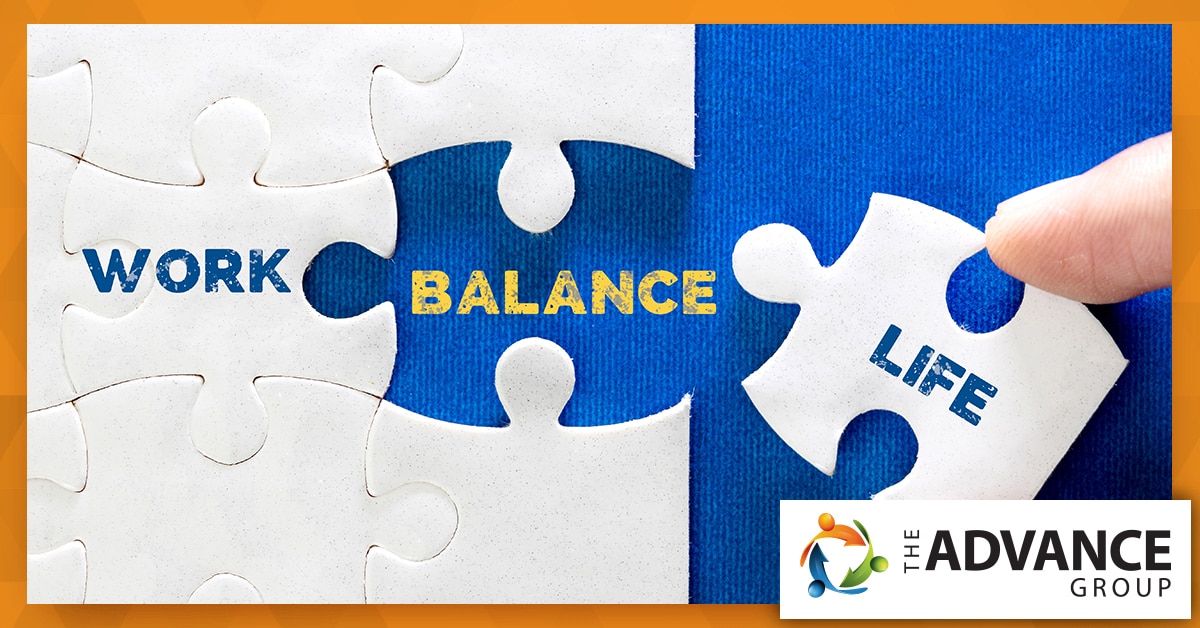
Work-Life Balance Has Changed. Here’s What to Aim For in 2021

Many professionals want to have a work-life balance. In the wake of 2020, exactly what that means has changed. Before the pandemic, work-life balance often meant having enough time away from the office to handle personal responsibilities, participate in hobbies, and spend time with loved ones. However, for those who have spent a year working from home, work-life balance may mean something different.

Achieving work-life balance isn’t always an easy feat, but it is possible. If you want to aim for it in 2021, here are some tips that can help.

Know What Balance Means to You

Before you take any steps, you need a solid understanding of what work-life balance actually means to you. Consider how you would spend your time in a “perfect” world, both personally and professionally. Envision an ideal weekday, weekend, career progression, family situation, or anything else that gives you insights.

After that, reflect on which of those is genuinely the most important to you. Put what you imagined in order, separating the must-haves from the nice-to-haves.

The goal isn’t to focus on creating “perfection.” Instead, it’s to understand where your priorities and dreams lie. How you would spend your time if you had full control over your schedule can tell you a lot, making it easier to figure out what balance means.

Set Appropriate Boundaries

Often, work-life balance is most easily disrupted when professional responsibilities leach into your personal time, something that may have occurred more frequently with remote workers during the pandemic. As a result, setting appropriate boundaries can be a crucial component of getting to a better place.

For example, you might want to make it a habit to completely shut down work-related technology when you’re off the clock. This includes everything from turning off your computer (if you work from home) to silencing notifications on your smartphone.

In many cases, you’ll also need to have a frank discussion with your manager about boundaries. Your manager’s expectations may play a role in the amount of leeway you have, as well as the nature of your position. As a result, it’s best to have a one-on-one conversation to determine what steps you can take to create much-needed separation between your personal and professional life.

Prioritize Self-Care

Self-care is crucial for maintaining your wellbeing, so it needs to be a priority. Make sure you block out time in your schedule for activities that leave you feeling refreshed and invigorated.

Healthy meals, quality sleep, and some exercise should typically be part of everyone’s wellness plan. Beyond that, it may depend on your personal preferences. Almost anything that leaves you with enough energy to handle your professional and personal responsibilities should be on the table, allowing you to create a custom approach that works best for you.

Ultimately, the tips above can make work-life balance easier to achieve in 2021. If you’d like to find out more, the team at The Advance Group wants to hear from you. Contact us today.


World Health Day Regaining Health and Economic Strength in 2021

World Health Day has been celebrated each year since 1948 on April 7th. The World Health Organization promotes this celebration yearly to promote awareness of health concerns. If we learned anything in the last year is that most of us take our health for granted. Whether you are recovering from COVID-19, or managed to avoid it, you may wonder what measures you can take to optimize your health and that of your employees.

Consider These Health-Promoting Tips:

Exercise. Exercise or just motion in general can help keep you healthy and alert. Get outside if you can for fresh air and vitamin D. There are many options for fitness regimens from strength training to spinning to yoga as well. But don’t underestimate the power of house or yard work. Any time you’re moving, you’re giving your fitness a boost.

Eat Well. Focus on whole, unprocessed food while limiting sugar and alcohol. Good nutrition can help keep your immune system in prime condition.

Continue Basic Health Measures. Many of the recommendations to prevent the spread of coronavirus were just common sense, such as regular, thorough hand washing. Some practices, such as wearing masks, will probably end, but possibly not considering the sharp drop in cold and flu incidence.

Reduce Stress. Stress can have a negative impact on your physical and mental health, which can affect your immune system. Yoga, meditation and exercise can help, but so can any hobby you enjoy.

Choose the Right Job. During the pandemic, many employers went out of their way to keep employees safe on the job. These companies continue to be employers of choice in 2021. A good job can help to boost health, not only because employed people have better access to health care, but because the right job can reduce stress and improve mental health.

Keep Employees Safer. While you have little control over employee health habits, you can do your part to keep them safe on the job. Continue CDC recommended health measures for the COVID-19 or any other infectious diseases that may arise. Provide safety training on the job to be sure they understand OSHA regulations as well as any making them aware of ergonomic or other on-the-job best practices.

The greatest stressors you’re likely to encounter is feeling frustrated you are stuck in the wrong job or difficulty finding candidates who are just the right fit. If you’re ready to try something new, contact The Advance Group today!


Did You Nail That Interview? Here Are Four Ways to Tell!

When you leave a job interview, it’s normal to feel a mix of emotions. You may be both excited about the possibility of snagging the role, as well as fearful that you didn’t perform as well during the interview as it may seem on the surface. This can lead to some anxiety, particularly if more doubts creep in or you begin overanalyzing how you did.

Luckily, you may be able to put your mind at ease. Certain signs often indicate that you did, in fact, nail your interview. If you want to know how you can figure out if you genuinely did well, here are four ways to tell.

1. Your Interview Ran Long

In most cases, if a hiring manager isn’t interested in a candidate, they aren’t going to keep the person in their office beyond the scheduled interview time. As a result, when the conversation lasts notably longer, that’s a solid indication that the hiring manager is seriously considering you for the position.

When a hiring manager thinks they have a great candidate in front of them, they are more inclined to dig deeper and learn all they can. They are essentially engaged in the conversation, so they aren’t in a rush to end it.

Now, this doesn’t mean that an interview that ends on time is a bad sign. That could indicate that the hiring manager has a tight schedule or a meeting scheduled right after yours, so they legitimately can’t afford to go over. Ending on time isn’t a negative sign; it’s just that going long tends to be positive.

2. There Were Follow-Up Questions

Suppose you answered an interview question thoroughly, and the hiring manager still asks follow-up questions that build upon your responses. In that case, that could mean they are very interested in you as a candidate. Any deviation from the standard question set could be a positive, suggesting that your other answers were solid.

However, if the hiring manager is rephrasing questions they already asked, that could indicate that your original answer wasn’t thorough enough or was off-target. If that was happening, you might want to reflect on your interview strategy, as improvements may be necessary.

3. You Were Introduced to Other Employees

Generally speaking, a hiring manager isn’t going to introduce a candidate to the rest of the team or other managers unless they are a top contender. Usually, that’s a sign that the hiring manager is excited about you, and they want to share that feeling with others.

It is important to note that this is a bit rare. Not getting introductions isn’t usually a bad sign, so don’t assume that you did poorly simply because you didn’t get to meet anyone else.

4. The Hiring Manager Replied to Your Thank You Email

If you got a quick reply from the hiring manager after sending out your thank you email, that is usually an indication you nailed an interview. That fast response means they want to keep you engaged, even if the content of their reply is fairly general. For example, even if they only let you know that they’ll be in touch in the coming days, that is a positive sign. It’s an attempt to stay connected with you, and that’s good stuff.

Ultimately, all four of the situation above could suggest that you nailed the interview. If you’d like to learn more about how to manage a job search effectively, the staff at The Advance Group wants to hear from you. Contact us today.



Lorem ipsum dolor sit amet, consectetur adipiscing elit. Ut elit tellus, luctus nec ullamcorper mattis, pulvinar dapibus leo.

Stacey Bigelow

CEO