You (Yes, YOU!) Can Make Yourself the Best Candidate in Your Field

Many professionals strive to be one of the best at their current workplace. It allows them to excel in their position, achieve recognition, and potentially advance. Plus, being viewed as a top performer can give you job security, as most companies aim to keep their best and brightest on staff.

However, by taking the right steps, it’s possible to achieve more. You can make yourself one of the best (if not the best) candidates in your field by using the right approach. If you’d like to know how you can position yourself as such, here’s a look at what you need to do.

Build Your Brand

Your professional brand is something that needs to be crafted and honed, not created incidentally. It spotlights the best of what you have to offer, along with your unique voice and perspective.

For most professionals, crafting a brand means developing an online presence that aligns with your career and area of expertise. This can include a combination of approaches, such as creating an active LinkedIn profile that includes details about your skills and experience as well as your accomplishments, writing blog posts that are highly relevant to your field, and engage appropriately with other experts on social media or in suitable forums.

A dedicated website can also be part of the equation. It can serve as a place to showcase your experience, discuss your thoughts on relevant trends, and otherwise showcase what you have to offer.

Your goal should be to establish your expertise, not solicit job offers. By keeping that as the focus, your brand concentrates on your capabilities, not your job search.

Keep Current on Trends

Those who are perceived as experts or thought leaders are well-informed about trends that impact their field. They keep current when it comes to relevant emerging technologies, shifts in their corresponding marketplace, and changes in public sentiment.

If you want to make yourself the best candidate, it’s wise to remain up-to-date at all times. That way, you can discuss the future of your industry, both in posts that support your brand and during interviews. Many hiring managers appreciate job seekers who can explain how what is on the horizon can help their company excel, mainly when it is relevant to the role the job seeker is trying to land.

In some cases, going further is also a smart move. For example, acquiring new skills on your own time that relate to emerging technologies can help you stand out from other candidates and increase your perceived value.

Engage With Your Network

If you only connect with members of your network when you need a new job, you might not be establishing yourself as a keen professional. Ultimately, you are missing out on opportunities to enhance your brand, including general awareness of what you have to offer.

By engaging with your network regularly, you are becoming an integral part of more communities. Your name will remain in the minds of those you connect with, and that may give you access to more opportunities, including those that aren’t publicly advertised, because your network feels confident about what you have to offer and your level of involvement in the field at-large.

In the end, all of the tips above can support your goal of making yourself the best candidate in the eyes of those hiring in your field. If you’d like to learn more, the staff at The Advance Group can help. Contact us to speak with a member of our skilled team today and see how our career management and professional branding expertise can benefit your Michigan and Ohio job search.




Work-Life Balance Is Possible (But Not Easy!) for New Parents

Many professionals know someone who seems to have it all together. Maybe it’s a working couple with children who makes it look like juggling their professional and family obligations is a breeze. It could even be images on social media of people living their “best lives,” bouncing from their kids’ soccer games to vacations all while being a top performer at work.

This can make it look like achieving an ideal work-life balance is natural or, at least, like those who pull it off are harboring some secret that makes it all possible. However, while it is often challenging, any new parents can pull it off. If you’re wondering how, here’s what you need to know.

Make the Most of Your Early Morning Hours

Getting up an hour or two before the children can give you the time you need to thrive. It gives you the ability to start your day without interruptions, making it easier to handle some work duties or household responsibilities. You could also use your early morning hours as “me” time, enabling you to squeeze in a workout, catch up on some reading, or enjoy a cup of coffee quietly.

Adopt a Project Manager Mindset

Project management is all about organization and scheduling. While outlining how you’ll spend every hour of your day (and even blocking out time for relaxing or spending time together as a family) might seem overkill, it can give you a substantial amount of control.

Plus, it reduces the odds that something will be overlooked. You won’t have to scramble or wonder if you aren’t adequately prepared for the next activity. You’ll have everything blocked out. As long as you follow the system, you can take charge of your day.

Just make sure that you also put your work breaks, family time, and personal tasks in your calendar. Additionally, set notifications that can tell you when it’s time to switch gears. That way, you won’t neglect yourself or your loved ones along the way.

Make the Most of Your Benefits

Many companies have policies or programs that are family- or new parent-friendly. This can include maternity and paternity leave, flexible schedules, telecommuting arrangements, daycare agreements, and much more.

Whether you are a new parent, have a child on the way, or have growing kids, review your employee handbook. See if there is a benefit that you haven’t been using and see if there is a way to maximize it.

Ultimately, it is possible to maintain your work-life balance as a new parent. While it can take some effort and planning, once you have the strategies in place, it’s easier to keep things in order.

If you’d like to learn more about managing your personal and professional life efficiently, the skilled team at The Advance Group can help. Contact us to speak with a member of our knowledgeable and experienced staff today and see how our expertise can benefit you or help you find a job better suited to your family’s lifestyle.


What Is the Difference Between MIG and TIG Welding?

If you are thinking about becoming a welder, you might have learned that there is more than one type of welding. Companies may look for candidates with specific welding skills, such as inert metal gas (MIG) or tungsten inert gas (TIG) welding experience or training.

By knowing what the difference is between MIG and TIG welding, you can make sure that you have the right capabilities to land your ideal job. If you aren’t familiar with what each type of welding entails, here’s an overview that can help.

What Is MIG Welding?

MIG welding is also referred to as gas metal arc welding or GMAW. With MIG welding, a metal wire is connected to an electrode. The electrode melds the two materials you are trying to bind together. As the wire makes its way through a torch, it liquifies. That liquid metal is continuously fed along the line that is being welded, allowing it to act as a filler between the two pieces. A MIG welder also releases a shielding gas, protecting the area being worked on from various atmospheric gases that can cause problems, such as nitrogen and oxygen.

Welders get a lot of benefits from choosing the MIG welding process. High-quality welds can be done quickly, and there’s a limited amount of splatter. It’s also incredibly versatile, working with a broad selection of metals and alloys.

However, MIG also has some drawbacks. It can be a pricier approach for one. Additionally, the metal cools very quickly, so making corrections is challenging. MIG welding also isn’t suitable for outdoor welding in most cases.

What Is TIG Welding?

TIG is a bit different as it uses an electrode made of tungsten that is non-consumable. It directs a current between the two metal pieces that you are trying to bind. The electrode heats the metal of the pieces until they reach the point of liquefaction. Along the way, the welder creates puddles of filler material, allowing the elements to join.

You have to use both hands with TIG welding. One holds the torch while the other keeps the filler material that is used to create the puddles in place. It is possible to create a successful weld without a filler material when you use the TIG welding approach, but not all companies use that method. There is also a foot pedal that controls the flow of electricity to the torch.

TIG welding provides several benefits. Not only can the welds be highly precise, but the aesthetic result also tends to be pleasing. The quality is high, and the materials involved are usually noncorrosive.

However, TIG welding does have disadvantages. It is a slower process, so patience is a necessity. Additionally, your work surface has to be exceptionally clean to get a good result.

Is One Approach Better Than the Other?

Both MIG and TIG welding are widely used, and one approach isn’t necessarily better than the other overall. However, one may outdo the other in certain situations. For example, MIG is often preferable for thicker metals, and it’s generally cheaper. It’s also easier for those new to welding to start with MIG. However, TIG might be best if you are joining small metal pieces, if the metal is thinner, or if the final appearance of the weld needs to be appealing.

Ultimately, both MIG and TIG welding have their place, and there are job opportunities that focus on each or that favor candidates with both. If you would like to learn more about starting a welding career or are looking for a job as a welder, the team at The Advance Group can help. Contact us to speak with our knowledgeable staff members today and see how our welding career expertise can benefit you.


Is Marijuana and Drug Testing Still Relevant for Your Light Industrial Workforce?

The legalization of medicinal and recreational marijuana seems to become more widespread each year. In Michigan, both medicinal and recreational cannabis is legal. In Ohio, medicinal marijuana is legal, while recreational is not. Illinois, a neighboring state, hasn’t legalized either.

Since marijuana laws vary dramatically from one state to the next, companies are struggling to determine whether drug testing (specifically, marijuana testing) is still relevant. If you are managing a light industrial workforce, here is what you need to consider.

Cannabis Is Still Illegal Federally

In the eyes of the federal government, marijuana use in all forms is against the law. For companies that are highly regulated on the federal level, screening for drug use might be a necessity. This includes as part of the hiring process and random drug testing of all current employees.

State and Local Laws

At times, companies have to follow state or local laws regarding the use of drug screening. This could mean that an employer can only require a test after a candidate has received a copy of the drug testing policy, has been given advance notice, and/or has received a conditional offer of employment.

There are also situations where the role dictates whether specific drug screening laws take effect. Additionally, some states allow employers to opt not to hire a candidate who either fails or refuses to participate.

However, there is also a state that takes the opposing stance. In Nevada – where both recreational and medicinal marijuana is legal – employers can’t refuse to hire a candidate for merely failing a marijuana drug screening.

While the presence or lack of any state or local laws regarding drug testing doesn’t necessarily impact the relevancy of such screening techniques, they are critical considerations. There will be instances when the tests are virtually mandatory, or that specific steps need to be followed. As a result, the laws, at a minimum, are relevant to your drug screening policy and associated procedures.

The Right to a Drug-Free Workplace

Employers are legally allowed to maintain a drug-free workplace. As long as all job seekers are informed in advance that the company is a drug-free work environment, they can keep their ability to screen for various substances, including marijuana in states where it is legalized.

However, the capabilities of marijuana drug tests are a point of debate. Unlike alcohol screening methods, which can largely determine if someone is under the influence of alcohol, tests for marijuana lack that degree of accuracy. The tests can only conclude whether a person has THC (the active and potentially impairing substance in cannabis) in their system, and detectable levels of THC can remain for weeks after the last use. As a result, companies that maintain drug-free workplaces or have to align with federal standards for their industry have to treat any positive test as being over the acceptable limit.

The Issue With Medical Marijuana Use

While employers who are required to adhere to federal regulations regarding the use of marijuana don’t have to make exceptions for medical marijuana users, those that don’t need to take additional care. Firing an employee who is a medicinal marijuana user with a current prescription could result in accusations of discrimination, mainly if medicinal marijuana is used to treat a disability.

Some states require that disabled medicinal marijuana users be given reasonable accommodation, permanently banning any negative consequences for failing a drug screening for THC. However, if marijuana use prevents the person from being able to do their job effectively or creates a safety risk, that exemption might not apply.

Ultimately, the issue of drug screening has become more complex, but that doesn’t mean it isn’t relevant. Employers need to make sure that they have clear policies and procedures in place, and that all of them respect the requirements dictated by federal, state, or local law based on their industry.

If you’d like to learn more, the staff at The Advance Group can help. Contact us today and see how our candidate screening expertise can benefit you.


Should You List Internships on a Resume?

As you prepare to create or update your resume, you might feel conflicted about what you should or shouldn’t include. If you participated in an internship, you might wonder whether it’s appropriate to list it or, at a minimum, if that’s a wise decision.

Luckily, figuring out whether you should include your internships is relatively simple. You need to examine your situation and see whether it would benefit you to add it. If you don’t know where to begin, here are some questions you can ask yourself that can guide you in the right direction.

Is the Internship Relevant?

An internship is technically working experience. While you may or may not have been paid for taking part, you were working in a professional environment, using skills you acquired, and enhancing your capabilities along the way. It’s just like any other job in that regard and can be put in the “work history” section of a resume.

As a result, you need to look at your internship the same way you would any other professional experience and determine if it is relevant to the role you want to land. Was it in the same field? Did you acquire transferable skills that a hiring manager would value?

In either of those cases, including your internship on your resume can be the right choice. It lets you highlight valuable experience, so listing it can work in your favor.

Is the Internship Recent?

Another critical consideration is whether the internship was recent. If you are a new graduate or participated in an internship within the past few years in preparation for a career pivot, then you might not have other relevant experience in the field. If that’s the case, then you want to include your internship.

However, if you’ve had several other relevant jobs since you completed your internship, including it might not be necessary. The same situation applies to entry-level jobs once a person gets deep into their career. While the experience might relate to the target role, the details don’t provide the hiring manager with value.

Is Your Resume Short Without It?

There are instances where even an internship from years past might be an excellent addition to a resume. If you’ve only worked for one or two companies since finishing your internship, and your resume seems a bit short as a result, you might want to include it. Otherwise, even if you have a decade or more for experience, your resume may look sparse.

Typically, hiring managers only skim a resume initially. If they seem an ample amount of whitespace at the bottom, they may assume that you don’t have the experience they need or that you are earlier in your career, than you might be. In this case, adding your internship makes your resume look more comprehensive at a glance, increasing the odds the hiring manager will take a closer look.

Ultimately, whether you choose to list an internship on a resume is a personal choice. Consider the questions above and decide whether including it works in your favor. If so, then add it to your “work history section,” just as you would with any other job.

If you’d like to learn more, the team at The Advance Group can help. Contact us to speak with a member of our staff today and see how our resume writing expertise can help you find a new job today.


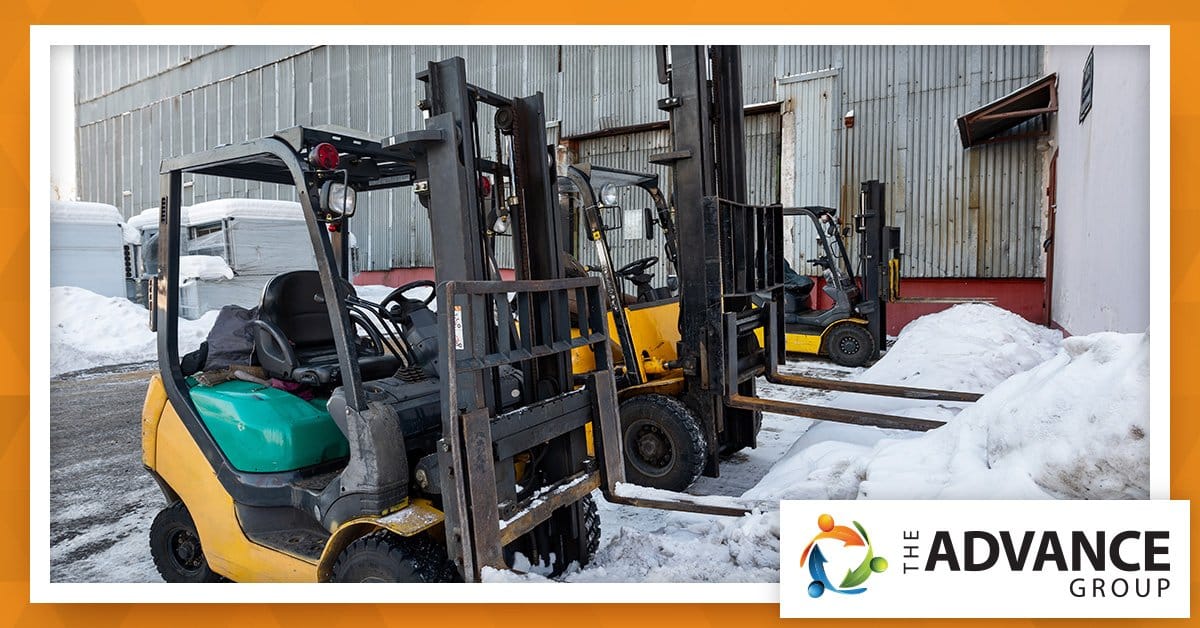
Ever Consider Working as a Forklift Operator?

For some, the idea of driving a forklift is very enticing. Operating equipment can be delightful as well as part of a lucrative career.

If you don’t have any training or prior experience, then you’ll need to take a few steps before you can start a career as a forklift operator. Here’s what you need to do to qualify for a job that focuses on driving forklifts

Training Programs and Technical Certifications

Before you can begin operating a forklift, you need sufficient training. Along with hands-on experience, forklift driver courses cover a ton of important information.

You’ll learn about workplace safety, including how various surface conditions and load types impact stability. Additionally, you’ll receive instruction on safe driving practices, how to adjust for pedestrian and equipment traffic, and even essential maintenance.

In many cases, you will have a chance to acquire skills for different kinds of forklifts, including standup and sit-down versions. Plus, you’ll review OSHA safety requirements as well as any more that are outlined by your state.

Typically, companies favor candidates who graduate from a robust training program or have a technical certification from a reputable entity. While you’ll also have to participate in additional training at the worksite, if you are hired (as OSHA requires this), it ensures you have the right foundational capabilities and knowledge to perform in the role.

Must-Have Skills for Forklift Drivers

Along with the hard skill you’ll acquire during training, others will benefit you as a forklift driver. Basic math and computer skills are beneficial. The ability to do basic math ensures you can properly calculate loads, while computer skills assist you with various forms of equipment operation.

Typically, the ability to handle some heavy lifting is highly desirable. While your primary duties may involve operating a forklift, that doesn’t mean you won’t have to carry weighty boxes or use tools that can be a bit hefty.

Many of the other needed ones are soft skills, a reflection of various traits that company’s look for in top candidates. Often, employers prefer job seekers who are very safety-minded. Safety is critical in any production or warehouse environment, and candidates with that mindset tend to make smarter choices.

The ability to communicate well is also vital. Usually, forklift operators are part of a team, and effective collaboration can hinge on each person’s ability to communicate effectively and work well together.

Attention to detail is similarly a must. You need to be able to follow directions precisely, ensuring you can perform critical duties accurately, like pulling items to fulfill an order that is preparing for shipment.

Keen situational awareness is another skill forklift drivers need. Since a warehouse or production environment tends to be very active, the ability to keep track of what others are doing is paramount. That way, the chances of an accident are reduced.

Ultimately, forklift operators need the right combination of training, experience, and skills to excel. If you would like to learn more or are interested in finding a forklift driving job, the team at The Advance Group can help. Contact us to speak with one of our recruiters today and see how our services can make it easier than ever to launch your forklift operator career.


Set Your Job Search Up for Success Now (Even If You Aren’t Looking Yet!)

Launching into a full-blown job search during the holiday season might not be appealing. After all, it can be a hectic time of year, particularly if you are already employed and are juggling your professional and personal obligations.

However, even if the idea of looking for a new opportunity isn’t on your to-do list today, if you plan on starting a search soon, it’s wise to spend a little time preparing. By doing so, you can set your job search up for success now, making it easier once you do decide to get moving.

If you want to make sure you are fully prepared for an upcoming job search, here are a few things worth doing today.

Make Connections

The holiday season is all about connecting, making it an ideal time to reach out to your network, and keep those relationships secure. If you haven’t checked in with a contact recently, now is a natural time to reach out. You can send a simple message wishing them happy holidays and asking how they are doing. Then, you can rekindle that connection before you discuss your upcoming job search.

Additionally, you can review your network to see if anyone is missing. If you haven’t added a former boss or coworker to your LinkedIn contacts, it’s a great time to reach out. Again, you can lead off with a friendly, “happy holidays” to get the conversation rolling, making it feel natural and a part of the season.

Refresh Your LinkedIn Profile

While you might not want to update your profile just yet fully, consider handling a few small adjustments. For example, if you haven’t refreshed your profile photo in a while, consider handling that. Also, review your headline and tweak it, if necessary. You want to make sure it feels engaging and current, ensuring it will make a positive impact once you initiate your search.

Additionally, consider updating your settings to let the LinkedIn community you are open to opportunities. This is a way to get started with a somewhat passive job search, as it allows hiring managers and recruiters to come to you. If you do this as well, you might want to boost your professional summary, too. Then, those who see your profile can learn about what you have to offer with a quick skim.

Create a Master Resume

Having your resume in order before you start a search is always a smart move. However, you might think that you can’t do much now, particularly since you want to target it for each position you pursue. In reality, you can get a head start on this part of the process by taking a little time to create a master resume.

With a master resume, you include every potentially relevant detail about your professional history. You don’t have to worry about the length of the document. Instead, the goal is to get every achievement and skill written down, quantifying the details when possible.

Then, when you launch your search, targeting your resume is a breeze. You open your master resume, delete the points that aren’t highly relevant to that role, and reorder them based on the company’s priorities. After that, you save that version of your resume separate from your master document and submit that variant for that particular job. Often, this approach is a significant time-saver in the long-run.

Ultimately, all of the steps above can allow you to set your job search up for success now, even if you don’t plan on starting right away. If you’d like to learn more, the team at The Advance Group can help. Contact us to speak with one of our recruiters today and see how our expertise can benefit you.


Is Winter Too Late for a Forklift Job?

It might not seem like forklift drivers would be in demand during the winter, but that isn’t the case. Many companies that have warehouse facilities or manage production require skilled forklift drivers all year-round, so they hire whenever there is a vacancy, regardless of the time of year.

If you are looking for a position that includes operating a forklift, there are options. Here’s a look at just some of the forklift jobs that are available right now.

Forklift – Dundee, MI

A manufacturing company that specializes in electrical and plumbing products is looking for a forklift operator for its second shift. The ideal candidate has at least two years of forklift experience, stable primary computer and tablet skills, and a history of good attendance. For the right candidate, the position might go permanent and, while the starting pay is competitive, joining the stable team also comes with a pay raise and excellent benefits.

Forklift – Rossford, OH

An automotive supplier is looking for backup forklift drivers who can also work on the production line. However, the right candidate might have a chance to become a full-time forklift operator. To qualify, you need at least two years of forklift experience in a fast-paced environment. The position is on the day shift and comes with competitive pay.

Material Handler – Monroe, MI

If you are looking for a forklift job, this opportunity is a great option. An automotive distribution company is hiring a material handler, and previous forklift experience is a must. The environment is fast-paced, and you’ll be responsible for pulling orders, shrink-wrapping shipments, and preparing orders for delivery. The pay is very competitive, and the right candidate may get a chance to join the permanent team.

Production Worker – Romulus, MI

The ideal candidate for this production worker opportunity has forklift driving skills, as the ability to operate a forklift is a fundamental part of the role. Additionally, you’ll handle a variety of general labor duties throughout the warehouse, making the job active and an excellent option for candidates who enjoy getting their hands dirty. Along with a competitive pay rate, this day shift position can go permanent.

Shipping Clerk – Monroe, MI

If you have previous forklift experience (either stand-up or sit-down), this shipping clerk role might be a great fit. You’ll be responsible for loading and unloading trailers, breaking down stock, labeling products, and stacking racks in a fast-paced automotive distribution company facility. The role is considered entry-level, so you don’t need a substantial amount of prior experience to qualify potentially. Along with a competitive pay rate and a day shift schedule, the position has a chance to go permanent, making it a long-term opportunity.


All of the positions above potentially involve forklift driving, making them ideal options for candidates who want to operate a forklift as part of their duties. If you’d like to learn more about these or other open Forklift jobs, the team at The Advance Group wants to hear from you. Contact us to speak with one of our recruiters today.


Yes, Your Career Can Survive into 2020

Automation in the workplace continues to make headlines, leaving many professionals concerned about the future of their careers. At some point, specific jobs may be entirely handled by artificial intelligence (AI) or automated robotic solutions, leaving the people who previously performed those duties without a job.

However, while automation is making waves, that doesn’t mean your career won’t survive in 2020 and beyond. By taking the right steps, you can protect yourself, ensuring that you remain a critical part of the workplace for years to come. Here’s how to get started.

Research Your Industry and Profession

First and foremost, you need to learn about how automation is affecting your industry or profession. Some roles are at higher risk of being eliminated than others, so it’s essential to find out now if you are working in a job that falls in a higher risk category, such as bookkeeping and payroll. By doing so, you can determine how urgent taking action is and use that to motivate yourself to futureproof your career.

Additionally, it can help ensure that you are realistic about automation. In some cases, professionals perceive a threat that doesn’t exist in their niche. Plus, they may be overlooking the benefits automation can provide, such as by eliminating the need for handling tedious, repetitive tasks, enabling you to focus on more engaging work.

Focus on the Right Upskilling Opportunities

Specific skills are outside of the capabilities of automation so that they will remain firmly in the hands of people. Critical thinking, creativity, complex problem-solving, collaboration, decision-making, and several others fall in this category, so by focusing on building skills in these and allied areas can protect your career.

When you look for opportunities to enhance your skill set, focus on areas that won’t be likely targets for automation. If you have access to professional development programs through your employer, explore those benefits. Also, branch out on your own to broaden your learning potential. Consider a certification program, online class, or volunteer opportunity that can help you grow, if you can’t get everything you need from your company.

Learn How to Harness Automation

One of the ways that you can ensure your career survives is to broaden your capabilities when it comes to harnessing automation. Every technology needs professionals who can operate it, so adding experience in that area makes you more valuable as automation becomes increasingly common.

This could include anything from learning how to make use of specific AI systems to acquiring skills that allow you to design, implement, and manage new solutions. As a bonus, by diving into these areas, you are showing employers that you are willing to take advantage of emerging technologies and adapt to their presence, both of which can make you a more valuable employee in their eyes.

Ultimately, all of the tips can help ensure your career survives in 2020 and beyond. If you’d like to find out more, the team at The Advance Group can help. Contact us with your questions today and see how our emerging technology expertise can benefit you.


Don’t Wait Until January to Find Work!

The holiday season is upon us, and it is a hectic time for many. At times, the idea of managing a job search while handling your holiday obligations might seem daunting. You might think that waiting until January is a better idea, but that isn’t always the case. Here’s a look at why you shouldn’t wait until January to find work.

Financial Shortfalls

If you don’t have a paycheck coming in, even a single month without income can derail your financial well-being, especially since the holidays can be expensive. Plus, there is a decent chance that you’d have to wait more than a month to actually get any money in your bank.

Most job searches take time. Along with finding opportunities, you have to refine your resume, wait to get called for an interview, attend the meeting, wait some more while they perform reference and background checks, get a start date, and wait once more for that day to arrive. Plus, even once you start working, you’ll have to complete a pay period, turn in a timesheet, and sit tight until payroll processing is through to actually see money in your bank account. That’s a long time to go without any cash coming in.

Less Competition

It isn’t uncommon for people to delay a job search during the holidays. They might assume that they don’t have time to add one to their already busy schedule, so they decide to put it off until January. This means they aren’t actively seeking out opportunities.

If you launch your job search now, you aren’t competing against candidates who decided to wait until January. This may make it easier to stand out, as the crowd could be smaller than it would be after the new year. Plus, many people decide to make finding a new job a New Year’s resolution, so your market might get flooded with candidates once 2020 arrives. By starting today, you are ahead of that group, which might give you an edge.

Companies Are Hiring Now

Many people assume that companies don’t hire during the holidays, but that isn’t true. When an organization has a critical vacancy, they move as quickly as possible to find a great candidate to fill it. By starting your job search now, you can apply to these openings, ensuring you don’t miss out on a great position that a company wants to fill fast.

Additionally, if a company wants to have a new hire in place on January 1, they have to start recruiting during the holidays. Even if they aren’t rushing, they still plan to make a decision before the start of 2020, and those who wait to launch a search in January won’t get a chance to land these opportunities.

Ultimately, if you need a job, delaying your search is never a great idea. Plus, there are excellent positions available right now. If you’d like to learn more about stellar opportunities, the team at The Advance Group wants to hear from you. Contact us to find out more about our open jobs today.


There’s Still Time to Get on a Recruiter’s “Nice” List!

With the holiday season upon us, many professionals assume that finding a new job isn’t possible until the start of the new year. However, that isn’t actually the case.

Employment opportunities exist all year-round. By partnering with a recruiter, you can find out about exciting positions that are being filled during the holiday season, including many that aren’t openly advertised to the public. If you want to get on a recruiter’s “nice” list before the end of the year, here’s how to get started.

Have a “Getting to Know You” Session

When you connect with a recruiter, your goal should be to forge a strong relationship that feels like a genuine partnership. This allows you to work together effectively, increasing the odds that you both can achieve your goals.

Often, the easiest way to create a strong connection is to start with a “getting to know you” session. Essentially, you’ll participate in a Q&A, serving both as the person who asks questions and the one answering them.

When you speak with the recruiter, ask questions that allow you to learn more about their capabilities. You might want to find out how often they place candidates with backgrounds similar to yours, the companies and industries they focus on, whether they proactively market job seekers, and average placement times. That way, you can gain a greater understanding of what the recruiter offers, as well as what you should expect from the relationship.

Additionally, you need to be open when the recruiter asks questions about your abilities. If you don’t provide an accurate look into your job history, skills, education, and accomplishments, they won’t be able to match you with opportunities effectively. Plus, this gives the recruiter the opportunity to determine whether they feel they can bring something to the partnership, allowing them to decide if it’s a strong match as well.

Touch Base Regularly

Once you partner with a recruiter, you should touch base regularly. That way, you can give them updates on your side of the job search process or provide them with additional information. Further, it allows them to give you a progress report if they haven’t already reached out to discuss opportunities.

Speak with your recruiter and ask how frequently they will touch base with you or how often you need to reach out. If they have a preference, they will let you know. However, if they don’t provide you with a clear update schedule, reaching out once every one to two weeks should be enough. Anything more than that could be viewed as pestering, so avoid being overzealous about updates.

Be Honest When Discussing Opportunities

If a recruiter presents you with a position, you need to provide them with honest feedback. Let your recruiter know what you do and don’t like about the role, particularly if there are deal-breakers that, in your eyes, make the job not worth pursuing.

By being straightforward, you are helping the recruiter learn about your needs and preferences. This makes it easier for them to find better matches going forward.

However, make sure you listen to the recruiter’s feedback as well. They can help ensure that your expectations are realistic, increasing the odds that your job search will yield positive results.

By following the tips above, you can forge a strong partnership with a recruiter before the end of the year. If you’re looking for a skilled recruiter, the staff at The Advance Group wants to hear from you. Contact us to speak with a member of our recruitment team today and see how our services can help you find a new position quickly and efficiently.


Same Company, New Job

When you find an employer you love, you usually feel pretty lucky. Working for a great company can be incredibly motivating and inspiring, and similar workplaces can be hard to find.

However, even if you love your employer, that doesn’t mean you’ll always feel the same way about your job. After a while, you might want to explore new positions, potentially including either opportunities to advance or roles in different fields that you find enticing.

Moving to a new job within the same company is possible, and it may be an ideal option. You get to stay with an employer you enjoy while still taking your career forward or in a new direction. If you want to know how you can make the transition, here are some tips for landing a new job at your current company.

Internal Transfers

Not every organization handles internal movement the same way. In some cases, internal transfer programs exist that help workers move within the company. Often, the employee handbook will outline if such an option is available. If not, then a discussion with HR or your manager may be necessary to find out if there is an internal transfer request procedure.

How an internal transfer request is handled can vary from one employer to the next. For example, you may need to submit it in writing. In your message, you would include details about your history with the company, what kind of transfer you are hoping for, and how the transfer would benefit the organization. Then, you would essentially wait for the results.

In other cases, you would apply to opportunities that are only available to internal candidates. Typically, these positions are listed as being open to existing employees and usually note that outside applicants won’t be considered. They may be listed on an internal employee webpage or on the main careers site with a special designation. In either case, you’d usually go through a hiring process that is highly similar to applying for an opportunity elsewhere, though it may be less cumbersome.

Applying for Positions

Not all companies have internal processes that help employees move within the organization. Additionally, even if one exists, you may still have other options for exploring opportunities.

Usually, in either case, this involves applying to vacancies just as you would if you weren’t a current employee. You would look for job announcements and submit your resume following the typical procedure.

When applying to publicly accessible job openings, you need to make sure that you target your resume and cover letter. You don’t want to assume that the hiring manager is familiar with what you bring to the table, so make sure that your application clearly demonstrates your capabilities.

Additionally, don’t expect any special treatment along the way. While many companies will favor current employees for certain roles, that doesn’t mean you’ll be able to bypass any part of the process. Similarly, a subpar application or interview can hurt your chances of being selected, so aim to present yourself in the best light possible, even if you have an existing relationship with the hiring manager.

Ultimately, by following the tips above, you can find a new job at your current company. If you’d like more suggestions, the staff at The Advance Group can help. Contact us to speak with one of our knowledgeable team members today and see how our job search expertise can benefit you.


Lorem ipsum dolor sit amet, consectetur adipiscing elit. Ut elit tellus, luctus nec ullamcorper mattis, pulvinar dapibus leo.

Stacey Bigelow

CEO