What Is a Performance Bonus? (And How Can You Get One?)

Many employees want to seize every opportunity to boost their income. While some professionals assume the only ways to bolster their pay are overtime hours or seeking out a higher paying position, that isn’t actually the case. Performance bonuses can be a great way to bump up earnings.

If you wonder what a performance bonus is and how you can get one, here’s what you need to know.

What Is a Performance Bonus?

In the simplest sense, a performance bonus is a financial reward for exceeding expectations. When an employee goes above and beyond, their employee may provide them with a bonus to showcase their appreciation for the extra effort.

The size of a performance bonus can vary depending on the nature of the work and the accomplishment itself. Additionally, a performance bonus might be a set dollar amount for exceeding a performance target, a percentage of sales, a percentage of captured savings, or something else that aligns with the achievement’s nature.

A performance bonus isn’t guaranteed. Instead, it’s additional compensation that has to be earned in a particular fashion. This gives employees the option of expanding their income through increased effort, ensuring that top performers are rewarded for exceeding expectations.

In some cases, what it takes to earn a performance bonus is spelled out. This gives employees the exact target, giving them a finish line that results in additional compensation.

However, performance bonuses may also be awarded for exceeding expectations in a manner that isn’t necessarily outlined. Employers can choose to offer this form of compensation whenever they see fit, which is why always striving to be a top performer can be worthwhile, as you may see an unexpected bump in your earnings as a reward.

How to Get Performance Bonuses and Other Benefits

As mentioned above, a performance bonus is potentially available to employees who strive to exceed expectations, performance targets, or otherwise do more than the bare minimum required in their position. However, having a great on-the-job performance can give employees access to more than a little extra compensation.

At The Advance Group, employees who have great on-the-job performances and solid attendance consistently can gain access to additional programs. Other benefits that may be available include:

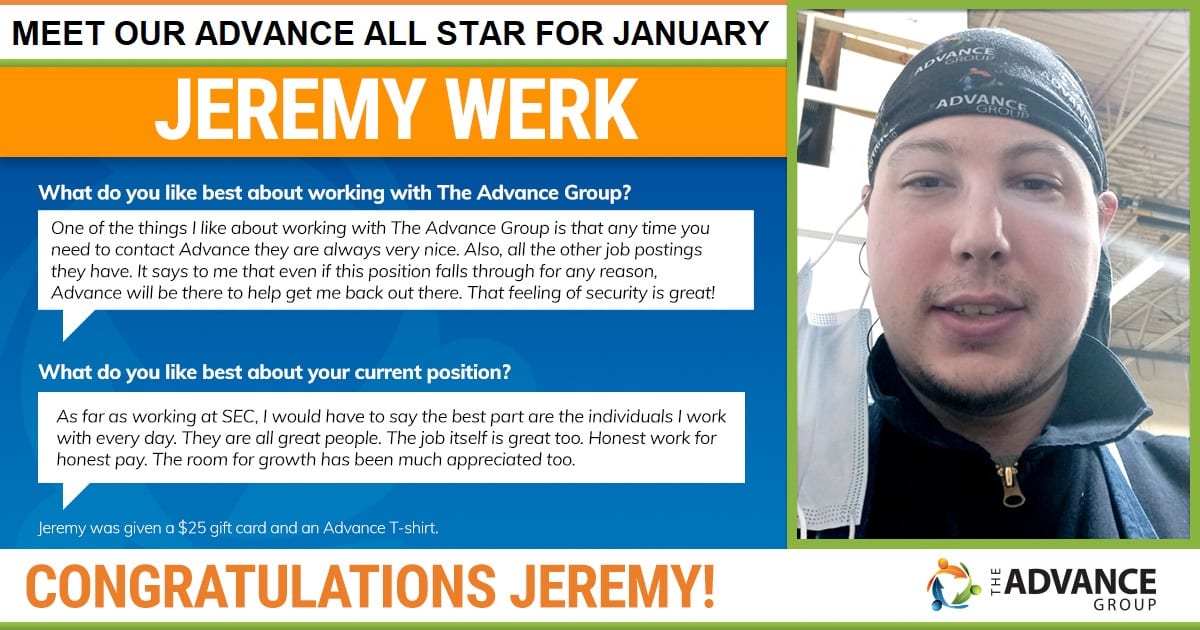
  • Advance All-Star Program
  • Steel-Toed Work Boot Reimbursement
  • COVID-19 Bonuses for Qualifying Essential Workers
  • Holiday Bonuses
  • Paid Time Off
  • Attendance Bonuses
  • Stay Bonuses
  • SMART Awards
  • And More

The Advance Group values each and every employee. That’s why we work diligently to ensure that top performers are regularly recognized and rewarded for their efforts.

If you’d like to find out more about the amazing benefits available through The Advance Group or are seeking out new job opportunities that can boost your earnings and your career, the team at The Advance Group wants to hear from you. Contact us to speak with a member of our recruitment team today and see how our programs can make work more rewarding.




Three Tips to Improve Your Job Search in Any Industry!

Many professionals launched job searches at the beginning of the year in hopes of furthering their careers. While seeking out new opportunities can be daunting, there are ways to streamline the process and poise yourself for reasonably quick success. If you want to make sure yours goes off without a hitch, here are three tips to improve your job search that work in any industry.

1. Honestly Assess Your Career

When many professionals begin looking for a new position, they jump right into the search. While being enthusiastic is certainly a positive, making your way to job boards or launching social media searches shouldn’t necessarily be your first step.

Instead, spend a little time assessing your career. Be honest with yourself about what’s gone right and where you’ve stumbled. Look at your skillset with a discerning eye and determine if you need to spend time augmenting it to get the job you have in mind. Consider what your references will say about you, both positive and negative. Envision your ideal role in a detailed manner, ensuring you can clearly see your target and remain focused.

An honest career assessment can be a powerful tool. Not only will it help you make sure that you’re headed in the right direction, but it also empowers you to identify any obstacles you may face. That way, you can address those points before applying to open positions, giving you a chance to position yourself as a stronger candidate.

2. Be Prepared for – But Not Afraid of – the Post-COVID Landscape

COVID-19 had a major impact on the world. Millions of people found themselves suddenly unemployed, while many others saw their hours reduced. Many had to adjust to working from home with little notice or training for professionals who kept their jobs. Additionally, companies that continued to hire had to alter their recruitment and hiring practices quickly.

While it may seem like the pandemic means that now isn’t a good time for a job search, that isn’t necessarily the case. Companies are still hiring, and there are opportunities worth pursuing.

However, it is wise to be prepared for what you may encounter due to COVID-19. Make sure you’re prepared to participate in video interviews, as those are incredibly common today. Additionally, consider highlighting your remote work skills – like familiarity with collaboration software, VPN, or video conferencing tools – on your resume and during your interview if you’re going after a work-from-home position.

3. Partner with a Staffing Firm

Managing a job search is always a big task, even when a pandemic isn’t in play. By partnering with a staffing firm, you gain access to allies who can identify suitable opportunities, provide you with guidance, and otherwise help you get your career moving in the right direction.

When you work with a recruitment agency, you may also get access to unadvertised positions. Plus, staffing firms are frequently the sole hiring source for leading companies, meaning you can’t access those opportunities unless you connect with the agency.

If you’re looking for a new job, the team at The Advance Group wants to hear from you. Contact us today to learn more about our open positions and see how our services can benefit you.


Remote Job Interview? Don’t Forget to Ask These Questions!

At the end of any job interview, you typically get a chance to ask the hiring manager a few questions. Usually, what you need to ask depends on the role you’re trying to land. However, if you’re interviewing for a remote position of almost any kind, certain questions are universal musts.

Remote positions aren’t entirely the same as their in-office counterparts. That’s why you need to ask questions specific to the arrangement, ensuring you can adequately assess what working in the position will be like and what the company has to offer you.

If you’re interviewing for a remote position and don’t know what to ask the hiring manager, here are a few questions to keep at the ready.

Is the Entire Team Remote, or Just This Position?

Understanding whether you’re part of a fully remote team is critical. It lets you know if other team members may be working together on-site or if you are all in the same boat and working from home.

While the hiring manager’s answer shouldn’t necessarily be a dealbreaker, it is important to understand that being the only remote employee on a team can introduce some challenges. In some ways, you’ll be the odd person out, and that may not be ideal. Additionally, the chances are high that the rest of your team will have an easier time bonding with each other since they are all in the same physical space.

Now, this doesn’t mean that you should bypass the job. Instead, you need to be ready to navigate the challenges that may arise if you’re the only remote worker.

What Are Your Expectations Regarding Work Hours?

Remote positions aren’t automatically fully flexible when it comes to when you work. You may be working from home and have to follow a more traditional schedule, ensuring you are actively available and productive during the same hours as everyone else.

It’s wise to ask the hiring manager what their expectations are regarding work hours. That way, you can find out exactly how flexible the job is before moving forward in the hiring process.

What Solutions, Tools, and Equipment Does the Company Provide to Remote Employees?

Knowing what tools you’ll have at your disposal is a must. This is particularly true when it comes to collaboration and communication solutions and security mechanisms like VPN or remote desktop connections. Additionally, it gives you a chance to determine what kind of physical equipment will be provided by the company.

Ideally, the hiring manager is going to be able to give you a reasonably thorough answer featuring some specifics. If they can’t clearly outline what’ll be available, that should be considered a red flag, as it may suggest that the company doesn’t offer much in the way of supportive tools, equipment, and technology solutions.

How Is Feedback Delivered to Remote Employees?

When you work in an office, a manager can offer you a quick “thank you” or some insights into your performance with ease. However, in a remote role, organic opportunities for fast feedback don’t often arise. As a result, it’s wise to ask how feedback is delivered, ensuring you know about the kinds of efforts the manager may make and whether they would meet your needs.

Ultimately, each of the questions above is worth asking at the end of your remote job interview. If you’d like to find out more, the team at The Advance Group can help. Contact us today.


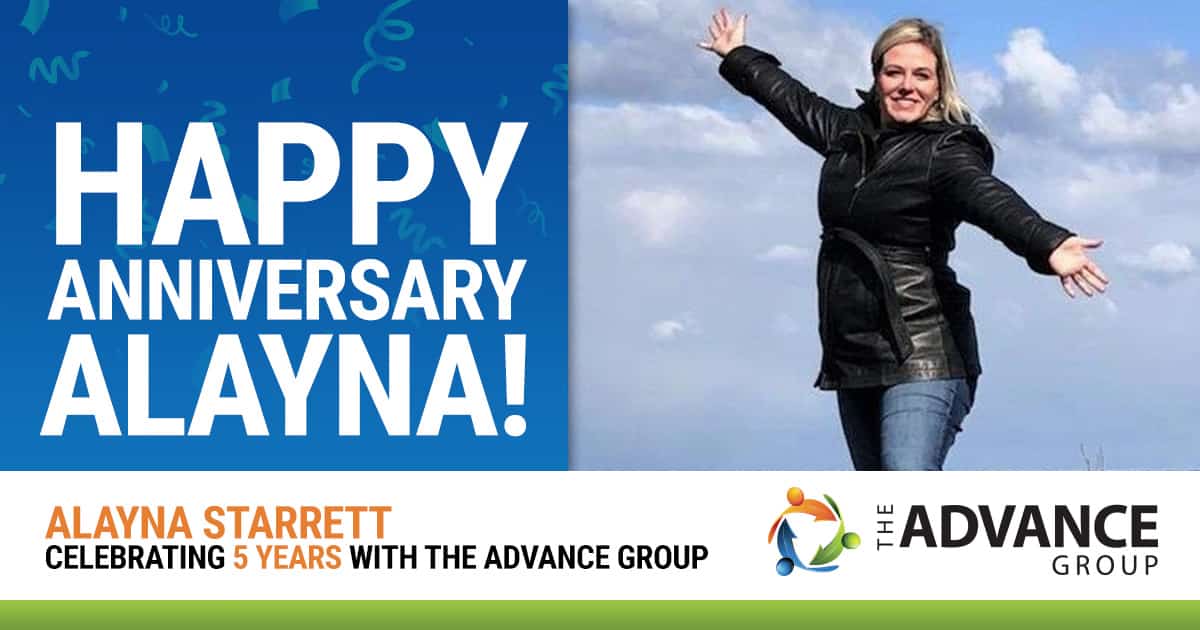
Happy 5th Anniversary, Alayna Starrett!


To celebrate Alayna Starrett’s 5th year with The Advance Group, we sat down with her for a Q & A session.  Here are a few highlights to enjoy:


Q:What is on your bucket list? So many things!
A: Here is a start: Learn Spanish, go on an African Safari (preferably with Jack Hannah ?), participate in a Polar Plunge


Q:What do you like to do in your spare time?
A: Garden! It’s a new-ish hobby and I have a lot to learn but being outside and watching my flowers and plants grow and flourish is so rewarding. I love being able to eat and share the healthy things I grow from seeds!


Q: What’s your favorite band?
Tom Petty and the Heartbreakers. Ever since I started making mix tapes when I was a kid (literally wait for a song to come on the radio to record on a cassette tape), I’ve been a super fan and was fortunate enough to see them in concert quite a few times before Tom Petty passed away. Their music makes me happy every time I hear it!


Alayna is in Business Development and works in our Sylvania branch.  Happy Anniversary, Alayna!

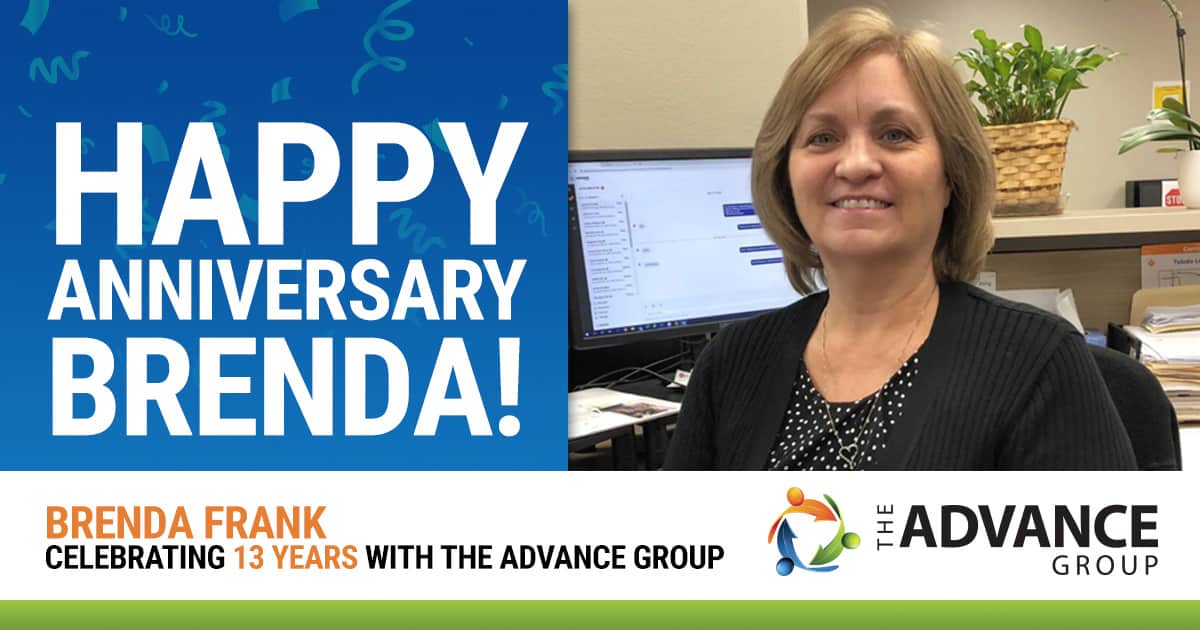
Happy 13th Anniversary, Brenda Frank!


To celebrate Brenda Frank’s 13th year with The Advance Group, we sat down with her for a Q & A session.  Here are a few highlights to enjoy:


Q: What quote do you live by?
A: It is what it is


Q: What’s your favorite song?
A: Unforgettable


Q: What’s your favorite holiday?
A: Halloween


Brenda is a Staffing Coordinator and works in our Sylvania branch, though she has been referred to as our Director of First Impressions.  Happy Anniversary, Brenda!

Now Is the Time to Focus on Employee Engagement!

Employee engagement has been a hot topic for a few years. However, now, it’s more important than ever, mainly because so many companies have had to embrace telecommuting.

When your team is working remotely, managing engagement can be incredibly challenging. After all, your workforce isn’t reporting to an office with you, so it can be hard to gauge their sentiment, mentality, and stress levels. Plus, there are fewer opportunities for organic socializing, making it harder to form bonds and stay connected.

However, engagement can also be an issue with teams working on-site. Just because a worker is physically present doesn’t mean they aren’t having trouble focusing and remaining productive.

Luckily, some options can help. If you want to boost employee engagement, here are some tips that can make a difference.

Reach Out for Feedback

Often, you can’t tell if you have an employee engagement issue if you don’t reach out to your team. While you may assume that you’d notice if someone is suddenly struggling, that isn’t always the case.

If you’re concerned about engagement, reach out to your team for feedback. Send out anonymous surveys as a starting point. With those, you can identify potential trends in pain points, allowing you to focus on areas that have the most significant negative impact across the board.

However, don’t be afraid to schedule one-on-one meetings with each employee to have an open and honest discussion. This is especially true with remote teams where you don’t have as many opportunities for casual conversations that let you know how they are feeling. Make it clear that you want to help them thrive and are hoping to learn more about what may be holding them back. Then, work together to identify potential solutions, allowing them to take an active role in addressing the problems.

Make Recognition a Priority

Acknowledging the accomplishments of your team can make a big difference. Recognition for a job well done is a morale booster. It lets the employee know that their efforts are seen and valued, which can go a long way.

But you don’t necessarily want to stop there. Making “thank you” part of your everyday conversations is also a wise move. Simply thanking your team for sending in a deliverable isn’t just polite; it’s a feel-good moment that boosts their mood. It shows that you appreciate even the smallest efforts on their part, creating a positive culture that’s all about gratitude.

Amp Up Communication

While you don’t need to cross the line into micromanaging, making communication a priority is essential. Many employees are nervous about what the future holds since the pandemic is still a factor.

By being open and honest about the team’s state and the company, you can prevent rumors from taking hold. That can lead to stronger company culture, even if the news you share isn’t always good.

Additionally, it allows you to calm fears that may be unfounded. Gossip can be damaging, particularly if it isn’t based on truth. With regular communication, you can learn about the issues and intervene, ensuring misinformation isn’t causing unnecessary damage.

Ultimately, employee engagement needs to be a focus in 2021. With the tips above, you can make it a priority with greater ease. If you’d like to learn more about managing engagement, the team at The Advance Group can help. Contact us today.


The Pros and Cons of Working Remotely

The Pros and Cons of Working Remotely

There was a time not so long ago when we all dreamed of working remotely. Having time in the morning to enjoy breakfast and a hot coffee or tea. Catching up on the news before making the “commute” to the laptop in the corner. The option to work in sweatpants or pajamas.

In 2020, millions of Americans were granted their wish thanks to pandemic-related lockdowns. Eventually – and sometimes quickly – those same Americans found out that there are pros to working from home, but there are also drawbacks. We talked to the team here at The Advance Group to find out what they like most (and least) about working from home, and what this can mean for your business moving forward.

The Advantages of Working Remotely

Working from home has its advantages, and the Advance team was quick to share what they love most about working remotely:

  • Flexibility to take care of appointments and errands
  • Fewer interruptions from co-workers
  • No commute

Niki said, “I feel like I get more done. I have fewer interruptions throughout the day from other people…the ability to work from home and save money on gas and save time on the commute is really an added bonus and something I consider as part of a great benefits/salary package.”

Tara is also pleased by the lack of commute. “I enjoy eliminating the commute, especially in the winter months, during poor weather conditions. I’m enjoying more casual attire. Also, there are far fewer interruptions and distractions,” she told us.

Tyler was pleasantly surprised by working from home, noting, “When I first transitioned to working from home, I thought there would be more challenges like communication issues because I’m not face-to-face with coworkers and because of the distractions that naturally come from working from home. In an effort to limit those challenges, I have set up a comfortable workstation and set boundaries with my family, so they know that while I am working, I need to stay focused on my work.”

Working from home has also agreed with Bill. “My productivity has increased significantly since I have been allowed to work from home,” he told us. “The office is filled with distractions, including random people looking for “15 minutes of your time.”

Alayna told us, “As an outside salesperson, it’s definitely been an interesting transition, and although I miss seeing clients and coworkers, I love working remotely. The time saved on commuting, the ability to do chores on my lunch break, and having only myself as a distraction has been great! The pros and cons will be different for everyone but offering remote work when possible is just another way for companies to attract and keep the talent they need.”

Linda offered some advice for using your lack of commute wisely, “For me, being organized and having a comfortable, dedicated workspace with little to no distractions is key! I also take advantage of not having a commute by doing some form of self-care in the morning. Sometimes that is actually just sleeping in a bit, sometimes a workout, sometimes journaling, sometimes yoga or a meditation video. Take advantage of the extra time that you are gifted.”

Stacey reminds us that remote work success is really about being self-motivated. “My experience working from home is that you have to have a dedicated workspace in a ‘distraction-free zone,’” she said.  “You also need to know when to say when.  Having a home office will allow you to close the door at the end of the day, but it can be hard to ‘turn off.’  I believe you have to be disciplined, a self-starter and a problem solver.  Learn how to step away and recharge to avoid burnout and know when to ask for help.”

The Cons of Working Remotely

Remote work isn’t always a walk in the park. As with anything, it has its drawbacks, and we asked our team about those, as well.

  • No physical separation between work and leisure time
  • Getting a change of scenery takes a great deal of effort.
  • Difficult to remember to get up and move

Niki told us, “One of the cons from working from home is that sometimes I get so focused on getting tasks done that I forget to get up and move around throughout the day…I need to try to remind myself to get up and take a stretch break every so often.”

While Tara doesn’t miss distractions, she does note that as a salesperson, working from home makes her miss other people. “The lack of interaction gets lonely and feels isolating.  Everyone is busy, but the positive interactions are lacking,” she said.

And What About Hybrid Schedules?

Hybrid schedules can provide the best of both worlds. Time to work from home and time to come into the office and separate work from home life and see other human beings. But that, too, can come with challenges.

Heather offered this advice to people juggling a hybrid schedule, “I love the balance that the hybrid schedule offers with time in the office and remote. The most important thing for me is to keep my morning schedule the same regardless of work location. This allows me to have extra time to get on a little early or do a quick chore in the morning when working remotely. On the other hand, I’m not stressed out and chasing the clock on days that I need the drive time to commute to the office. A hybrid schedule also means that you need to be organized. It’s important to have a routine to make sure that nothing gets left behind, either at the office or home.”

Can Remote Work Help You Attract Talent?

While there are some drawbacks to working from home, it’s clear from our small survey that the pros far outweigh the cons. Many people are used to working from home now. They’ve developed good habits and have fallen into routines that work for them, and as they look for new job opportunities, they will seek out companies that allow remote work or, at a minimum, offer hybrid telecommuting options.

If you want to learn more about what job seekers want in a post-pandemic world and how you can deliver on those needs to attract top talent, contact The Advance Group today.

Looking for a Job You Can Keep All Year? Look Here!

When most professionals launch job searches, their goal is to find a long-term position. Often, they turn to resources like job boards and social media, conducting cumbersome searches that don’t always yield results.

Regretfully, many job seekers overlook a powerful alternative to those burdensome job search approaches recruitment firms. At times, this is because some candidates assume that staffing agencies only fill short-term roles. As a result, they bypass partnering with a recruitment firm, a move that can be a major misstep.

At The Advance Group, we do more than fill temporary positions. Our team also places candidates in long-term roles, many of which can become permanent with the company. If you’re looking for a job you can keep all year, here’s why working with The Advance Group is a smart decision.

Long-Term Opportunities with The Advance Group

While The Advance Group team does fill temporary positions, much of what we handle is finding candidates for long-term jobs. This includes contract roles that can last an entire year, as well as jobs that have the potential to go permanent with the company.

We place candidates in a variety of fields and industries. In the industrial sector, we fill entry-level positions, management openings, and everything in between. No matter where you are in your industrial career, we may have an opportunity for you.

Additionally, our team also place administrative, clerical, and professional candidates. Whether you have accounting, human resources, mail processing, receptionist, dispatch, call center, or any other administrative skill set, we may have a long-term opportunity for you.

Not Happy with Your Position? We’ll Help You Find a New One

At The Advance Group, our goal is always to land you your ideal job the first time. We focus on making high-quality matches, ensuring candidates and companies find exactly what they need to thrive.

To make that happen, we spend time getting to know you, including what you have to offer as an employee and where your priorities and needs lie. That way, we can match you with right-fit opportunities, increasing the odds that you’ll be happy and productive today, tomorrow, and into the future.

However, if you’re ever dissatisfied with your role, you have choices. Since your long-term satisfaction is a priority, our team will help you explore alternatives if your current job isn’t meeting your needs or keeping you engaged.

After learning about what isn’t working in your present position, we’ll revisit your needs, preferences, and skillset. Your feedback will empower us to find a better match, giving you a chance to transition into a job that offers precisely what you require to succeed.

If you’re looking for a new job that you can keep all year, the staff at The Advance Group wants to hear from you. Contact us to speak with a member of our recruitment team today and see how our services can make landing your perfect position easier than ever before.


Job Seekers Are Looking for Something Else Post-COVID. Do You Offer It?

COVID-19 didn’t just fundamentally alter the business landscape; it also changed employee expectations about work. In a post-COVID world, job seekers have new priorities when they are considering a new employer. And if you don’t offer what candidates are hoping to find, you may be missing out on top talent.

Luckily, much of what today’s job seekers are searching for isn’t difficult to offer or showcase in your job ads. If you aren’t sure you’re bringing the right stuff to the table, here’s a look at what candidates want to find in a post-COVID landscape.

Flexibility

Many professionals have personally experienced working from home due to the pandemic. Shelter-in-place orders during the early days of COVID-19 made heading to the office, not an option, so companies had to adapt and embrace telecommuting to maintain operations.

As a result, professionals understand the benefits that come with working remotely, and many won’t be interested in abandoning the arrangement entirely. While they will become increasingly open to returning to offices part of the time, there’s a good chance top talent will favor employers that give them some degree of flexibility. This could include anything from alternative work schedules to allowing them to work from home at least on occasion.

To put it simply, if you aren’t offering any flexible arrangements, you may have trouble securing the candidates you need. That means adding flexible options may no longer be optional for companies seeking to get their hands on leading candidates.

Autonomy

Flexibility isn’t the only thing professionals got a taste of during the pandemic; they also had a larger degree of autonomy. Managers had to give their teams greater ownership over their tasks as their employees began working from home as there was simply no way to exude a substantial amount of control.

Since many top performers don’t require much oversight to thrive, the increase in autonomy was often highly appreciated. It allowed them to focus on results and solve their own problems, something they will likely look for in future employers.

Security

Security can be a bit of an ambiguous term, as it may mean different things to each candidate. However, it is increasingly becoming a priority for many, mainly because of the uncertainty COVID-19 created.

Offering candidates a sense of security can come in many forms. Comprehensive sick leave programs can be one approach, ensuring your employees have protections if they or a family member fall ill. Telecommuting options can be another, as they provide mechanisms that can keep your team working even if new shelter-in-place orders emerge, decreasing the odds they’ll find themselves suddenly unemployed.

Ideally, companies who want to offer security need to reflect on the concerns professionals have at this time. That way, they can find opportunities to address them, ensuring they can provide a sense of security to new hires.

Ultimately, COVID-19 has changed candidate expectations. If your company is looking to hire, aligning your offerings with those expectations is essential, ensuring you can position your organization as an employer of choice today and into the future.

If you’d like to learn more about securing top talent, the team at The Advance Group can help. Contact us today.


Why Don’t Your Employees Stick Around (And What Can You Do Differently?)

For companies, turnover is always a major concern. After all, when churn rates are high, it holds the organization back. Departments may end up shorthanded, and productivity can drop. Plus, recruiting, hiring, and onboarding a stream of new employees is costly, hurting the bottom line.

If your company is struggling with retention, you’re in luck. By understanding what may be driving workers away, you can make meaningful changes that reduce turnover. If you aren’t sure where to begin, here are some of the most common reasons employees don’t stick around and what you can do about them.

Subpar Managers

A major driving force behind why many employees leave companies is subpar managers. If managers are disengaged or ineffective, tend toward micromanaging, or don’t acknowledge their team’s efforts, many top performers won’t stick around for long.

Examine turnover rates at the manager level. See if there are clusters of employees leaving, and if so, spend time looking at that manager’s actions and approaches to see if you can identify an issue. If you do, intervene by offering the manager training that helps them improve in critical areas, creating a chance for them to resolve the problem and boost retention in their department or team.

Disengagement

When an employee is disengaged, they often struggle. Whether it’s boredom, dissatisfaction with the culture, burnout, or any other issue, failing to address it usually means that the worker won’t stay for much longer.

Spend some time exploring engagement levels. You may want to use anonymous surveys, one-on-one meetings, retention interviews, or a range of other techniques to identify problems that may be leading to disengagement. Then, as you identify sources of dissatisfaction, work to address them.

In some cases, this may require company-wide adjustments, such as if a poor culture has developed. However, individual employee-level actions might also be necessary, particularly in instances of boredom and burnout.

If you can fix the root cause of disengagement, you can boost job satisfaction. When you do, turnover metrics will improve.

Recruitment Missteps

Sometimes, turnover rises because the wrong workers are being hired from the beginning. If you sacrifice the new hire’s quality in favor of speed, odds are higher that the employee isn’t actually a great fit for the job. If that occurs, frustration can build from multiple directions. The worker may struggle in the role, leading to dissatisfaction. Additionally, their manager might have to spend a lot of time correcting errors and improving the worker’s capabilities, at times in vain.

Ideally, companies should make sure that the quality of the match is the top priority. When you hire a candidate with the right skill set and attitude, their odds of excelling are higher. As a result, they may be more satisfied in the role, and their manager will be happier with their performance, both of which can lead to retention improvements.

If you want to make sure that you hire high-quality candidates, partnering with the team at The Advance Group can help. Contact us to learn more about our recruitment services and see how working with us can make finding the ideal candidate for any role easier than ever.


Tips for Better (And Faster!) Hiring in 2021

In the early days of the pandemic, many companies held onto the recruitment practices they had developed before COVID-19. However, as time passed, it often became clear that yesterday’s approaches weren’t as effective in the existing climate.

Since the pandemic is still a concern today, companies need to reexamine their recruitment and hiring practices. That way, they can find the talent with greater ease and in less time, ensuring they can meet their 2021 hiring goals.

If you aren’t sure how to begin, here are some tips for better recruitment and quicker hiring in 2021.

Make Flexible Work Arrangements Part of Your New Normal

Today, many professionals have experienced work-from-home arrangements first-hand. As a result, a significant portion has discovered the benefits of this type of flexible work arrangement, including everything from eliminating commutes to improved work-life balance.

While some companies may be eager to have employees return to the workplace, not all professionals will feel the same. If you eliminate flexible work arrangements – or make it clear that you plan to do so shortly – you’re going to miss out on talent who favor this benefit.

Instead of ditching telecommuting options, find ways to integrate them into your new normal. For example, if positions can be permanently remote, consider maintaining that as an option. If telecommuting full-time isn’t practical, consider letting professionals work from home at least part-time.

That will make you a more attractive employer, making recruitment easier to manage. Plus, it may make it easier to broaden your talent pool. After all, full-time remote positions don’t have to go to candidates in your local area, so you may be able to tap talent who aren’t in your city or state.

Adopt Simplified, Streamlined, and Mobile-Friendly Practices

If you want to increase your talent pool’s size, simplifying and streamlining your application process is a must. Asking candidates to jump through too many hoops – such as submitting a resume and making them fill out an application or asking multiple essay questions – makes applying cumbersome. It may even be considered too much trouble in some cases, causing candidates to abandon the process before they finish.

Additionally, job seekers often rely on mobile devices for their job search. If your application process isn’t mobile-friendly, they may choose to walk away instead of fighting with it or coming back to it when they are at a computer.

Ideally, you want your application process to be a breeze. Eliminate as many steps as possible, and make sure it can be completed on any device.

Partner with a Staffing Firm to Hire Better and Faster

If you truly want to update your hiring practices for 2021, partnering with a staffing firm is a wise choice. You’ll gain access to recruitment experts who can help you find in-demand talent with greater ease. Plus, they have reliable, streamlined practices that simplify hiring, all while providing you with access to a robust, pre-vetted talent pool of active and passive job seekers.

Your hiring process can be ready for today’s demands and prepared for what tomorrow may hold by working with a recruitment agency. If you’d like to make yours 2021-ready, the team at The Advance Group can help. Contact us to learn more about our services and see how our hiring solutions can make 2021 your best year yet.


Lorem ipsum dolor sit amet, consectetur adipiscing elit. Ut elit tellus, luctus nec ullamcorper mattis, pulvinar dapibus leo.

Stacey Bigelow

CEO