How Can You Make the Best Hire for Your Company?

It isn’t easy to find the best candidate to join your team. Usually, you only have a limited amount of time to determine whether the job seeker is a great fit. Plus, you only have certain screening tools or methods at your disposal, some of which can be a bit limited.

However, even if that’s the case, that doesn’t mean you can’t make the best hire for your company. If you want to make sure you snag the ideal job seeker for your open position, here are some tips that can help.

Write a Great Vacancy Announcement

Your job ad directly influences the quality of candidates you attract. If your listing is intriguing, speaks to the job seeker’s priorities, and showcases why you should be considered an employer of choice, you’ll have a better chance of securing top talent. Plus, if you provide a clear overview of what the job entails, focus on the right skills as keywords, and otherwise define what it takes to thrive in the role properly, you’ll increase your odds of identifying a great match.

Make sure to include the skills that are crucial for the candidate to have on day one in the job ad. Additionally, tap on what your company is bringing to the table, including a salary range and glimpse at the benefits package. That way, the candidate knows what you’re looking for as well as why you are a great employer.

Prioritize Potential and Passion

When you’re hiring, it can be a smart move to make a candidate’s potential a priority. A job seeker with the right foundational skills who is exceptionally passionate about their field and the opportunity may outperform an experienced but less enthusiastic candidate over the long-term. Plus, an excited job seeker may imbue new energy into your team, igniting their colleagues’ potential, as well.

If you want to focus on potential, make sure your job ad only lists skills that are genuinely required on day one as must-haves. That way, you don’t screen out excellent candidates with tons of potential by mistake.

Consider Personality

It’s usually relatively easy to evaluate a candidate’s technical abilities. While hard skills are essential, they aren’t the only factor when you want to make the best hire possible. A job seeker’s personality is also a critical point to examine.

Not only will their personality influence how well they fit in with their team, but it also affects whether they’ll mesh with the company’s culture. As a result, you need to consider it before you make a decision.

Ultimately, all of the hiring tips above can make it easier to locate and select the best candidate for the position. If you’d like to learn more about finding exceptional job seekers for your vacant roles, the skilled staff at The Advance Group can help. Contact us to speak with one of our talented recruitment specialists today and see how our hiring expertise can benefit you.


Making These LinkedIn Connections Can Boost Your Career

Having a strong professional network can be critical for success. Since LinkedIn is the quintessential social network for professionals, it’s a valuable tool for cultivating the relationships that could benefit your career. However, LinkedIn can only help you if you make the right connections.

If you are trying to boost your career, here are some LinkedIn connections you need to make.

Former Colleagues and Managers

People you worked with in the past are a crucial part of your network. They have direct experience working with you, so they have detailed knowledge of what you bring to the table. Plus, they may be especially willing to extend themselves if you need assistance, particularly if you keep the relationship strong and reciprocal.

Former colleagues and managers can serve two functions. First, they can be great references, giving you a person to turn to when you need one as part of a job search. Second, they can be a source of referrals, letting you learn about positions that might not otherwise cross your radar.

Professionals You Meet at Conferences and Events

When you attend a networking event or conference, the people you meet along the way can make great additions to your network. They may become a valuable source of information, a trusted confidante, a mentor, or a referral source in the future. As a result, it’s a relationship with cultivating.

Instead of asking for a business card after you’ve had a conversation, consider requesting to connect on LinkedIn. You can send an invitation immediately from your phone. Plus, you’ll be able to follow up with ease once the event is over.

Like-Minded Professionals You Don’t Know

While connecting with professionals, you don’t know it might make you uncomfortable at first, that doesn’t mean it isn’t a good idea. Plus, if you have something in common, such as working in the same field, then it might not be as hard as you think.

Considering sending a message and introducing yourself, pointing out what you have in common, and then asking a question that can help you forge a relationship. Many professionals enjoy talking about themselves, so if you can request insights into the person’s area of expertise, they may respond. Similarly, if they post content that you admire, a compliment could serve as an icebreaker, allowing you to expand your network further.

Professional Recruiters

When it comes to networking, recruiters can be great connections. They often have a vast number of contacts and access to an employer pipeline so that they can make an excellent addition. Just make sure you focus on recruiters who serve your particular industry and have amazing reputations. That way, you can secure a high-quality contact who may be able to boost your career.

If you’d like to learn more about how to make the most of LinkedIn as a professional or are looking to start a new job search, the skilled and experienced staff at The Advance Group can help. Contact us to speak with one of our talented recruiters today and see how our LinkedIn networking expertise can benefit your career.


Client COVID-19 Information

As a valued client and partner of The Advance Group, we wanted to take this opportunity to apprise you of our efforts with respect to the novel coronavirus, COVID-19.

Our temporary workers’ safety and well-being is paramount to us, as is the safety and well-being of your employees. Therefore, we have advised our temporary employees about how to take care of themselves, protect others, and monitor the latest developments. Per the  U.S. Centers for Disease Control and Prevention,  we have informed our employees that they should:

  • Avoid close contact with people who are sick
  • Avoid touching their eyes, nose, and mouth
  • Stay home when they are sick, they should be fever free without medication for 24 hours
  • Cover their cough or sneeze with a tissue, then throw the tissue in the trash
  • Clean and disinfect frequently touched objects and surfaces using a regular household cleaning spray or wipe
  • Follow CDC’s recommendations for using a face mask
  • Wash their hands often


We also have encouraged our temporary workers to keep up-to-date on developments by visiting the About Coronavirus Disease 2019 and CDC’s Frequently Asked Questions and Answers webpages.

We trust that you are advising your employees similarly and that you will apply the same safety policies and procedures to The Advance Group’s temporary workers that you apply to your own employees.

Note that we stand ready to assist you in navigating this public health challenge and furthering the well-being of all employees.


Should you wish to discuss this issue or have any questions, please let us know.

Sincerely,

Stacey Bigelow, President

Employee COVID-19 Information

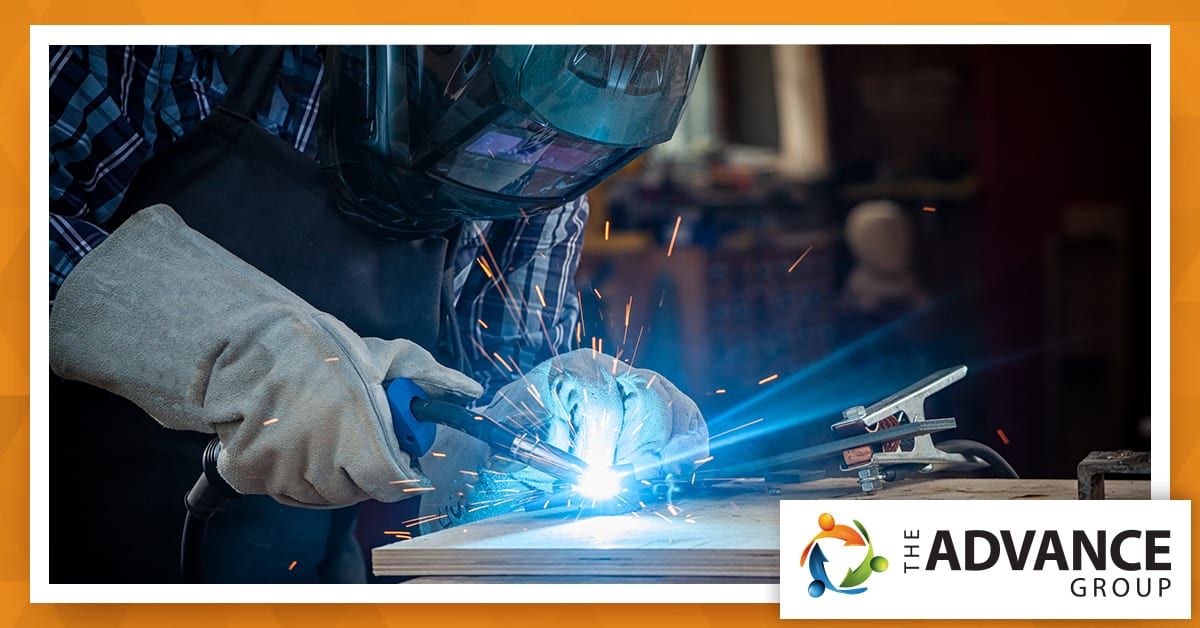
5 Skills All Welders Need to Possess

If you want to be an exceptional welder, you’ll need more than just technical prowess. While being adept at welding itself is essential; having specific soft skills is crucial if you want to have an incredibly successful career. By knowing which ones can make a difference, you can position yourself to excel. With that in mind, here’s a look at five skills all welders need to possess.

1. Attention to Detail

When you’re a welder, every millimeter matters. So does the aesthetic quality of your work, particularly if your welds will be exposed. And that’s what makes attention to detail so important.

Detail-oriented welders are more accurate than their counterparts. Additionally, they understand the need for visually pleasing results and will spend time creating welds that aren’t just strong, but pleasant-looking as well.

2. Communication

In most cases, welders work as part of a team. They could be one of several welders or may work closely with other tradespeople to create the final product. Being in sync with everyone involved is essential. Otherwise, the results may be less than ideal.

With great communication skills, you are better equipped to collaborate with your colleagues. Plus, you’ll have an easier time conveying complex ideas to those who may not be as familiar with your skills, and that can make a difference, as well.

3. Organization

Welders tend to use a lot of tools and materials. Without organization skills, keeping track of where everything is or how much of something you have becomes difficult. When things are misplaced, you decrease your efficiency, as you have to spend time tracking down what you need.

In contrast, strong organizational skills boost productivity. You’ll always know right where to look when you need a tool or material, allowing you to work more quickly.

4. Focus

Concentration is a critical skill for welders. At times, the work can be a bit tedious or slow-moving. When this happens, you need the ability to remain focused even when you would rather let your mind wander. Otherwise, the quality of your work may diminish.

5. Accountability

Also, though welders tend to work on teams, individual accountability is still critical. Typically, other welders or tradespeople need you to finish your task before they can complete theirs. If you aren’t accountable for your work, you could cause delays that harm the entire team.

Essentially, other employees and managers need to be able to trust and rely on you. That way, they know you’ll handle your responsibilities and that they can focus on completing their work promptly.

Ultimately, all welders need the five soft skills above if they are going to thrive. If you’d like to learn more about what it takes to have a successful welding career, or if you’re ready to find a new welder job, the talented team at The Advance Group can help. Contact us to speak with one of our skilled staff members today and see how our welding career expertise can benefit you.


Do You Have an Emergency Readiness Plan in Place for COVID-19?

The coronavirus outbreak has been wreaking havoc all across the globe. It’s led to a disease called COVID-19, a viral infection with no available vaccine. The virus is spreading with surprising speed, and over 3,000 people have died after contracting the illness.

Since the number of COVID-19 infections in the United States is increasing rapidly, employers have to take action. Not only do they have to have a plan for curtailing the spread of the disease, but they also have to be ready for unexpected absences that could hinder productivity.

If you don’t have an emergency readiness plan in place for the coronavirus, now is the time to create one. If you don’t know where to begin, here are some tips.

Clean Work Areas Regularly and Thoroughly

Along with being spread through respiratory droplets, COVID-19 may also be transferrable through contaminated objects or surfaces. If you want to limit the virus’s ability to spread, it’s critical to disinfect workspaces regularly. This includes everything from desks, computers, and telephones to elevator buttons, staircase handrails, and doorknobs. Office equipment, like copiers and shredders, should also get regular wipe-downs.

Encourage Ill Employees to Stay Home

First and foremost, if an employee believes they have symptoms that align with the COVID-19 infection, they should stay home from work or leave the workplace immediately. This decreases the odds that they’ll spread the disease to their coworkers.

If necessary, consider creating a separate policy regarding sick leave or approved absences. Make sure that it’s generous and encourages employees to err on the side of caution without having to fear any repercussions.

Additionally, be ready to tell sick employees that they are required to leave. Some may be resistant, but you must get them out of the workplace, so don’t be afraid to make exiting if asked mandatory.

Maximize Remote Work Options

Instituting new remote work options during this period of uncertainty is a smart move. This can allow employees to manage their duties without having to come into the office and may be helpful for those who are reluctant to miss a workday but may be ill.

Additionally, it allows you to limit the number of physical contact employees have to have with one another while maintaining productivity. This could reduce the odds of infection, suggesting a person’s home environment is relatively controlled and may allow your workforce to stay healthier, longer.

Create a Communication Plan

Having a mechanism ready for sharing public health information – such as an employee email or cell phone number list – is essential. That way, the company can release details that can combat rumors or workers’ fears and share critical updates if the need arises.

Plus, it ensures that policy updates and similar changes are shared with everyone and that the message remains consistent. This decreases the likelihood of confusion or miscommunications.

Prepare for Your Possible Workforce Needs

If COVID-19 reaches your workplace, you may find yourself short-handed quickly. Having a contingent workforce available who can fill in any gaps is ideal, ensuring you can remain productive if your company can remain open.

Consider partnering with a staffing firm as soon as possible. Discuss your potential needs in advance. That way, should you require an employee quickly, the recruiters will already know what you require and can find a great candidate fast.

If you would like to know more about how you can create an emergency readiness plan for COVID-19, the team at The Advance Group can help. Contact us today and see how our planning expertise can benefit you.


5 Great General Labor Jobs Available Today

A general labor job can be an excellent fit for many people. It can help you launch your industrial career, earn a steady income, and remain physically active while at work. Plus, you may have opportunities to learn to operate various kinds of equipment, assist with maintenance, and much more.

If you are looking for a general labor job, you’re in luck. Here are five great opportunities that are available right now.

General Labor – Dearborn Heights, MI

A manufacturing company that focuses on the aerospace industry has an immediate need for a general laborer. The selected candidate will operate stamping, drilling, and taping machines. Plus, they’ll sleeve parts, cut materials, and assist with floor cleanup. If chosen, you might get a chance to use a Hi-lo, too.

This opportunity is a day shift position, Monday through Friday. It also comes with a competitive pay rate and overtime may be available during busy seasons.

General Labor – Detroit, MI

If you’re looking for a dayshift, Monday through Friday, opportunity in Detroit, this general labor job might be right for you. An iron scrap metal company needs to expand its team quickly and is looking for someone who can perform a range of duties.

Along with sorting scrap metal, you’ll also operate heavy equipment and forklifts. The ideal candidate has at least two years of experience in a manufacturing environment, as well as the ability to lift up to 50 lbs. Starting pay is competitive, and the role has the possibility of being long-term.

General Labor – Toledo, OH

A scrap metal recycling company is looking for a general laborer. This position is temp-to-hire. If the chosen candidate exceeds expectations, they will be able to join the company permanently.

The role is very physical, requiring a lot of lifting, twisting, reaching, and bending. The ability to lift up to 50 lbs. is a must. A willingness to work in an environment with extreme conditions is also essential.

Once selected, the new hire will join the first shift, working 5:00 am to 3:15 pm, Monday through Friday, as well as 5:00 am to 1:30 pm on most Saturdays. The pay rate is competitive, and there is room for growth with this company.

General Labor – Romulus, MI

If you’re mechanically inclined and looking for a Monday through Friday, first shift opportunity with overtime, a company in Romulus might be looking for someone just like you. In the position, you’d grind metal parts, finish parts with hand tools, operate a forklift, and assist with various warehouse duties.

The pay rate is competitive, and, for the right candidate, the position could be long-term.

General Labor – Rossford, OH

If you’re looking for a general labor job but don’t have any experience, this position might be a great fit. A powder coating company is looking for general laborers for long-term positions. As long as you have an exceptional work ethic and thrive in a team environment, you may be qualified. If chosen, you’ll hang parts for powder coating, take powder coated parts off the line, and inspect the final product.

Opportunities are available on both the first and second shift. Those working on the second shift receive a pay differential. Additionally, the chosen candidate is eligible for a pay increase after working there for six months and is eligible for a second potential raise at the end of the first year.

All of the general labor positions above are available today. If you’d like to learn more about these or other general labor opportunities, the team at The Advance Group can help. Contact us to speak with a recruiter today.


You (Yes, YOU!) Can Make Yourself the Best Candidate in Your Field

Many professionals strive to be one of the best at their current workplace. It allows them to excel in their position, achieve recognition, and potentially advance. Plus, being viewed as a top performer can give you job security, as most companies aim to keep their best and brightest on staff.

However, by taking the right steps, it’s possible to achieve more. You can make yourself one of the best (if not the best) candidates in your field by using the right approach. If you’d like to know how you can position yourself as such, here’s a look at what you need to do.

Build Your Brand

Your professional brand is something that needs to be crafted and honed, not created incidentally. It spotlights the best of what you have to offer, along with your unique voice and perspective.

For most professionals, crafting a brand means developing an online presence that aligns with your career and area of expertise. This can include a combination of approaches, such as creating an active LinkedIn profile that includes details about your skills and experience as well as your accomplishments, writing blog posts that are highly relevant to your field, and engage appropriately with other experts on social media or in suitable forums.

A dedicated website can also be part of the equation. It can serve as a place to showcase your experience, discuss your thoughts on relevant trends, and otherwise showcase what you have to offer.

Your goal should be to establish your expertise, not solicit job offers. By keeping that as the focus, your brand concentrates on your capabilities, not your job search.

Keep Current on Trends

Those who are perceived as experts or thought leaders are well-informed about trends that impact their field. They keep current when it comes to relevant emerging technologies, shifts in their corresponding marketplace, and changes in public sentiment.

If you want to make yourself the best candidate, it’s wise to remain up-to-date at all times. That way, you can discuss the future of your industry, both in posts that support your brand and during interviews. Many hiring managers appreciate job seekers who can explain how what is on the horizon can help their company excel, mainly when it is relevant to the role the job seeker is trying to land.

In some cases, going further is also a smart move. For example, acquiring new skills on your own time that relate to emerging technologies can help you stand out from other candidates and increase your perceived value.

Engage With Your Network

If you only connect with members of your network when you need a new job, you might not be establishing yourself as a keen professional. Ultimately, you are missing out on opportunities to enhance your brand, including general awareness of what you have to offer.

By engaging with your network regularly, you are becoming an integral part of more communities. Your name will remain in the minds of those you connect with, and that may give you access to more opportunities, including those that aren’t publicly advertised, because your network feels confident about what you have to offer and your level of involvement in the field at-large.

In the end, all of the tips above can support your goal of making yourself the best candidate in the eyes of those hiring in your field. If you’d like to learn more, the staff at The Advance Group can help. Contact us to speak with a member of our skilled team today and see how our career management and professional branding expertise can benefit your Michigan and Ohio job search.


This Trick Takes the Stress Out of Scheduling

Scheduling can be a contentious issue in any company. Managers often have to balance the organization’s needs with employee availability and preferences. Plus, there can be fluctuating occurrences that have to be addressed, like vacations or extended sick leave, that make maintaining a steady schedule challenging.

Finding a way to handle staff schedules in a way that works for the company but is also well received by your team isn’t easy. However, there is an approach you can use to make the process less stressful. If you want to take the stress out of scheduling, here’s a tip that can help.

The Scheduling Challenge

Often, scheduling a data-driven process. Managers review the needs of the organization, compare it to employee availability data, and try to create a schedule that is functional and efficient. The issue is, this method removes the “human” factor. It doesn’t account for how workers feel about the scheduling choices being made, and that can be problematic.

If your employees feel that some people are unfairly getting a more favorable schedule, that can impact your company’s culture. It can breed a sense of envy and distrust. Some workers may feel negatively about management, and some may begin to resent the team members that they believe are unjustly benefitting from the schedule.

Plus, if some employees believe they are perpetually getting the short end of the stick or their work schedule makes it difficult to manage their personal life, their stress levels can rise. At times, these feelings may even lead to burnout, which can lead to falling productivity and higher turnover.

Why Empathy Makes a Difference

If you want to take the stress out of scheduling, you need to look beyond the data. Before you solidify a plan, you need to use some empathy.

Begin by talking with your team. Find out what challenges they have been facing due to the existing or past schedule. Ask questions about any upcoming events in the workers’ lives that might need accommodating. See if their availability needs updating or if it may need an update in the near future.

If your employees aren’t comfortable speaking with you directly about issues they are experiencing, consider using a different approach. For example, a survey that can be submitted anonymously may give them a platform to air any grievances or present concerns without feeling put on the spot.

Then, once you have the information, try to be compassionate as you create the schedule. While you still need to make sure the company’s needs are handled, you may have enough flexibility to apply some adjustments that can benefit your employees.

Just make sure that you keep things fair. Don’t prioritize one employee’s needs over another’s without justification and, if you have to turn down a worker’s scheduling request, speak with them regarding the decision. Communication and empathy can work wonders when you are creating schedules, allowing you to make the experience less stressful for all involved.

If you’d like to find out more, the team at The Advance Group can help. Contact us today and see how our employee management expertise can benefit you and find exciting new employees available to start today.


Work-Life Balance Is Possible (But Not Easy!) for New Parents

Many professionals know someone who seems to have it all together. Maybe it’s a working couple with children who makes it look like juggling their professional and family obligations is a breeze. It could even be images on social media of people living their “best lives,” bouncing from their kids’ soccer games to vacations all while being a top performer at work.

This can make it look like achieving an ideal work-life balance is natural or, at least, like those who pull it off are harboring some secret that makes it all possible. However, while it is often challenging, any new parents can pull it off. If you’re wondering how, here’s what you need to know.

Make the Most of Your Early Morning Hours

Getting up an hour or two before the children can give you the time you need to thrive. It gives you the ability to start your day without interruptions, making it easier to handle some work duties or household responsibilities. You could also use your early morning hours as “me” time, enabling you to squeeze in a workout, catch up on some reading, or enjoy a cup of coffee quietly.

Adopt a Project Manager Mindset

Project management is all about organization and scheduling. While outlining how you’ll spend every hour of your day (and even blocking out time for relaxing or spending time together as a family) might seem overkill, it can give you a substantial amount of control.

Plus, it reduces the odds that something will be overlooked. You won’t have to scramble or wonder if you aren’t adequately prepared for the next activity. You’ll have everything blocked out. As long as you follow the system, you can take charge of your day.

Just make sure that you also put your work breaks, family time, and personal tasks in your calendar. Additionally, set notifications that can tell you when it’s time to switch gears. That way, you won’t neglect yourself or your loved ones along the way.

Make the Most of Your Benefits

Many companies have policies or programs that are family- or new parent-friendly. This can include maternity and paternity leave, flexible schedules, telecommuting arrangements, daycare agreements, and much more.

Whether you are a new parent, have a child on the way, or have growing kids, review your employee handbook. See if there is a benefit that you haven’t been using and see if there is a way to maximize it.

Ultimately, it is possible to maintain your work-life balance as a new parent. While it can take some effort and planning, once you have the strategies in place, it’s easier to keep things in order.

If you’d like to learn more about managing your personal and professional life efficiently, the skilled team at The Advance Group can help. Contact us to speak with a member of our knowledgeable and experienced staff today and see how our expertise can benefit you or help you find a job better suited to your family’s lifestyle.


What Is the Difference Between MIG and TIG Welding?

If you are thinking about becoming a welder, you might have learned that there is more than one type of welding. Companies may look for candidates with specific welding skills, such as inert metal gas (MIG) or tungsten inert gas (TIG) welding experience or training.

By knowing what the difference is between MIG and TIG welding, you can make sure that you have the right capabilities to land your ideal job. If you aren’t familiar with what each type of welding entails, here’s an overview that can help.

What Is MIG Welding?

MIG welding is also referred to as gas metal arc welding or GMAW. With MIG welding, a metal wire is connected to an electrode. The electrode melds the two materials you are trying to bind together. As the wire makes its way through a torch, it liquifies. That liquid metal is continuously fed along the line that is being welded, allowing it to act as a filler between the two pieces. A MIG welder also releases a shielding gas, protecting the area being worked on from various atmospheric gases that can cause problems, such as nitrogen and oxygen.

Welders get a lot of benefits from choosing the MIG welding process. High-quality welds can be done quickly, and there’s a limited amount of splatter. It’s also incredibly versatile, working with a broad selection of metals and alloys.

However, MIG also has some drawbacks. It can be a pricier approach for one. Additionally, the metal cools very quickly, so making corrections is challenging. MIG welding also isn’t suitable for outdoor welding in most cases.

What Is TIG Welding?

TIG is a bit different as it uses an electrode made of tungsten that is non-consumable. It directs a current between the two metal pieces that you are trying to bind. The electrode heats the metal of the pieces until they reach the point of liquefaction. Along the way, the welder creates puddles of filler material, allowing the elements to join.

You have to use both hands with TIG welding. One holds the torch while the other keeps the filler material that is used to create the puddles in place. It is possible to create a successful weld without a filler material when you use the TIG welding approach, but not all companies use that method. There is also a foot pedal that controls the flow of electricity to the torch.

TIG welding provides several benefits. Not only can the welds be highly precise, but the aesthetic result also tends to be pleasing. The quality is high, and the materials involved are usually noncorrosive.

However, TIG welding does have disadvantages. It is a slower process, so patience is a necessity. Additionally, your work surface has to be exceptionally clean to get a good result.

Is One Approach Better Than the Other?

Both MIG and TIG welding are widely used, and one approach isn’t necessarily better than the other overall. However, one may outdo the other in certain situations. For example, MIG is often preferable for thicker metals, and it’s generally cheaper. It’s also easier for those new to welding to start with MIG. However, TIG might be best if you are joining small metal pieces, if the metal is thinner, or if the final appearance of the weld needs to be appealing.

Ultimately, both MIG and TIG welding have their place, and there are job opportunities that focus on each or that favor candidates with both. If you would like to learn more about starting a welding career or are looking for a job as a welder, the team at The Advance Group can help. Contact us to speak with our knowledgeable staff members today and see how our welding career expertise can benefit you.


Is Marijuana and Drug Testing Still Relevant for Your Light Industrial Workforce?

The legalization of medicinal and recreational marijuana seems to become more widespread each year. In Michigan, both medicinal and recreational cannabis is legal. In Ohio, medicinal marijuana is legal, while recreational is not. Illinois, a neighboring state, hasn’t legalized either.

Since marijuana laws vary dramatically from one state to the next, companies are struggling to determine whether drug testing (specifically, marijuana testing) is still relevant. If you are managing a light industrial workforce, here is what you need to consider.

Cannabis Is Still Illegal Federally

In the eyes of the federal government, marijuana use in all forms is against the law. For companies that are highly regulated on the federal level, screening for drug use might be a necessity. This includes as part of the hiring process and random drug testing of all current employees.

State and Local Laws

At times, companies have to follow state or local laws regarding the use of drug screening. This could mean that an employer can only require a test after a candidate has received a copy of the drug testing policy, has been given advance notice, and/or has received a conditional offer of employment.

There are also situations where the role dictates whether specific drug screening laws take effect. Additionally, some states allow employers to opt not to hire a candidate who either fails or refuses to participate.

However, there is also a state that takes the opposing stance. In Nevada – where both recreational and medicinal marijuana is legal – employers can’t refuse to hire a candidate for merely failing a marijuana drug screening.

While the presence or lack of any state or local laws regarding drug testing doesn’t necessarily impact the relevancy of such screening techniques, they are critical considerations. There will be instances when the tests are virtually mandatory, or that specific steps need to be followed. As a result, the laws, at a minimum, are relevant to your drug screening policy and associated procedures.

The Right to a Drug-Free Workplace

Employers are legally allowed to maintain a drug-free workplace. As long as all job seekers are informed in advance that the company is a drug-free work environment, they can keep their ability to screen for various substances, including marijuana in states where it is legalized.

However, the capabilities of marijuana drug tests are a point of debate. Unlike alcohol screening methods, which can largely determine if someone is under the influence of alcohol, tests for marijuana lack that degree of accuracy. The tests can only conclude whether a person has THC (the active and potentially impairing substance in cannabis) in their system, and detectable levels of THC can remain for weeks after the last use. As a result, companies that maintain drug-free workplaces or have to align with federal standards for their industry have to treat any positive test as being over the acceptable limit.

The Issue With Medical Marijuana Use

While employers who are required to adhere to federal regulations regarding the use of marijuana don’t have to make exceptions for medical marijuana users, those that don’t need to take additional care. Firing an employee who is a medicinal marijuana user with a current prescription could result in accusations of discrimination, mainly if medicinal marijuana is used to treat a disability.

Some states require that disabled medicinal marijuana users be given reasonable accommodation, permanently banning any negative consequences for failing a drug screening for THC. However, if marijuana use prevents the person from being able to do their job effectively or creates a safety risk, that exemption might not apply.

Ultimately, the issue of drug screening has become more complex, but that doesn’t mean it isn’t relevant. Employers need to make sure that they have clear policies and procedures in place, and that all of them respect the requirements dictated by federal, state, or local law based on their industry.

If you’d like to learn more, the staff at The Advance Group can help. Contact us today and see how our candidate screening expertise can benefit you.



Lorem ipsum dolor sit amet, consectetur adipiscing elit. Ut elit tellus, luctus nec ullamcorper mattis, pulvinar dapibus leo.

Stacey Bigelow

CEO